Showing posts with label Noir. Show all posts

Wednesday, 29 June 2022

Winners of the #NoirFire microfic writing contest and giveaway

Our lovely judges Valeria and Fábio have picked the winners of the speculative noir micro-fiction contest. Here to shock us, thrill us and chill us, are the prize-winning stories.


The Winner

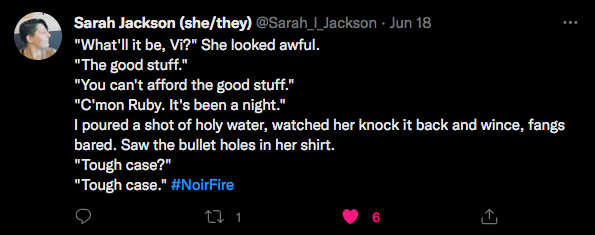
The winning story is this lovely, paranormal crime vignette from @Sarah_I_Jackson, who receive two FFN anthologies in paperback plus an e-book of Dan Grace’s Winter from Unsung Stories:

“What'll it be, Vi?” She looked awful. / “The good stuff.” / “You can't afford the good stuff.” / “C’mon Ruby. It's been a night.” / I poured a shot of holy water, watched her knock it back and wince, fangs bared. Saw the bullet holes in her shirt. / “Tough case?” / “Tough case.”

The Runners-up:

In no particular order, the two runners up, who each win e-books of three FFN anthologies plus Winter, are…

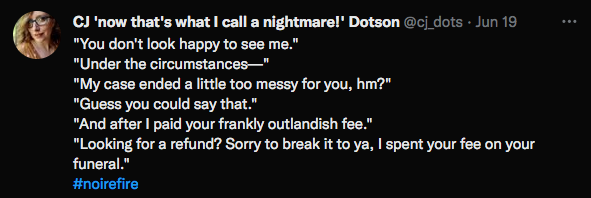
This horror-noir with a funebrous twist from @cj_dots:

“You don't look happy to see me.” / “Under the circumstances—” / “My case ended a little too messy for you, hm?” / “Guess you could say that.” / “And after I paid your frankly outlandish fee.” / “Looking for a refund? Sorry to break it to ya, I spent your fee on your funeral.”

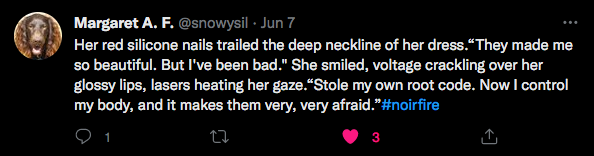
And this fierce cyber-rebellion moment from @snowysil:

Her red silicone nails trailed the deep neckline of her dress. “They made me so beautiful. But I've been bad.” She smiled, voltage crackling over her glossy lips, lasers heating her gaze. “Stole my own root code. Now I control my body, and it makes them very, very afraid.”

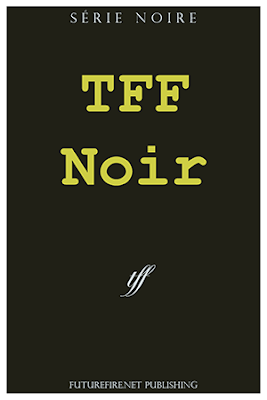
All these micro-stories are worthy of the Noir Fire title, and we loved reading them and all the other entries! If this has whetted your appetite for more of this sort of thing, why not pick up the anthology…?

Monday, 27 June 2022

Micro-interview with editor Djibril al-Ayad

Micro-interview with Djibril al-Ayad, co-editor of the the Noir Fire anthology.

TFF: Where did the idea from this anthology come from?


Djibril al-Ayad: Not gonna lie, my fabulous co-editor is the brains behind this operation (I’m at best the muscle; at worst a sleazy, corrupt freeloader running contraband through his barely-breaking-even dive bar…). When she walked into my office with an offer I couldn't refuse—backed up by a secret investor—I could see the smart move from the start. Takes a better man than me (or at least a soberer one) to say no to a dame like that. And hey: I didn't live to regret it, did I?

TFF: If you were a private eye, how would you call your agency?

DA: Private Ayad? I’m terrible at this…

TFF: Which is the most “noir” city you ever visited and why?

DA: I’m going to say Long Beach, LA County, California. Lovely place, great art galleries, even a dog beach, but approaching or leaving or even just driving past at dusk, the skyline just says Cyberpunk. Maybe Private Ayad should open their office there.

TFF: Do you think it's possible to reconcile noir bleackness and positive, progressive narratives?

DA: Always. I think some of the most beautiful, positive and progressive stories are set against the backdrop of having to survive pretty bleak surroundings. Even if the noir protagonist is their own worst enemy and not going to get a happy ending, just seeing “the helpers,” and people living their passionate, diverse, messy lives despite it all is a hugely optimistic thing to see.

TFF: What are you working on next?

DA: No concrete plans yet, but after the next few regular issues of The Future Fire, I’m sure we’ll have another themed, special or collaborative project to share with you. We’re always happy to meet new friends, so chuck ideas our way if you have any!


You can find purchase links and more information about the Noir Fire anthology at http://press.futurefire.net/p/noir-fire.html

Friday, 24 June 2022

Mini-interview with Dan Grace

Mini-interview with Dan Grace, author of “Immaterial” in the Noir Fire anthology.


TFF: What does “Immaterial” mean to you?

Dan Grace: A question that was troubling me when I wrote this story was the idea of immaterial labour and its place in my own, materialist understanding of the world. I'm a library worker by day so the question of immaterial production, knowledge production and so on is something I think about a lot. For me this story is part of a wider critique of certain strains of utopianism (left and right) that see us as able to leave the material world behind somehow, to ascend to some fully automated paradise, when what often happens is that in our rush to embrace ‘automated’ processes we obfuscate the existence of a global working class upon whose labour any ‘immaterial’ world must be built.

TFF: Is there a happy medium between living in a decadent, virtual world while the body sits in its own filth, and disconnecting completely to live with nature?

DG: There has to be! There is no going back to anything, to any state of nature etc., short of some hideous catastrophe that forces it upon us. Yet to allow ourselves to believe that we all can live in some decadent virtual world is disconnected from the material reality of the majority of the worlds population, and is therefore not, in my opinion, an option either. It is the hope of a new world beyond this binary that really drives me forward—that this seeming contradiction, the material and the immaterial, can and will be resolved. How, when and by who are, of course, the big questions, and ones that I think can be usefully and creatively explored through speculative fiction.

TFF: What are you working on next?

DG: I’ve had a few years out from writing so I’m trying to fire my engines up again. I have a longer piece in the very, very early stages that’s attempting to tackle some of the stuff outlined above.


You can find purchase links and more information about the Noir Fire anthology at http://press.futurefire.net/p/noir-fire.html

Wednesday, 22 June 2022

Micro-interview with Benjanun Sriduangkaew

We interviewed Benjanun Sriduangkaew author of “We Are All Wasteland on the Inside” in the Noir Fire anthology.


TFF: What does “We Are All Wasteland on the Inside” mean to you?

Benjanun Sriduangkaew: I really enjoyed writing the bleakness in it—it’s a pretty grim story all around, with nods to a kind of “Spirited Away but really, really dark and lesbian.” A lot of my fiction has a happy ending, but this one has a conclusion that refuses to absolve or soothe the protagonist. She will always be rejected by the magic forest.

TFF: Which elements of your writing (this story or others) are directly inspired by mythology and folk tale: settings, characters/creatures, tropes, storylines…?

BS: A lot are! In my Machine Mandate books, a lot of characters—AIs in particular—have names derived from Buddhist or Taoist concepts, or deities (Samsara, Klesa, Benzaiten in Autumn). And sometimes my story beats are influenced by Asian epics, with a lot of disguises and hidden identities.

TFF: Other than Noir and SF, what two (or more) genres would you like to see smashed together in a future anthology?

BS: Psychological thriller and SF, or giant mecha and magic.

TFF: What are you working on next?

BS: A new series after the Machine Mandate finishes in July, and collaborations with my co-author that’s turning out to be a really fun lesbian urban fantasy!


You can find purchase links and more information about the Noir Fire anthology at http://press.futurefire.net/p/noir-fire.html

Monday, 20 June 2022

Mini-interview with Timothy Yeo

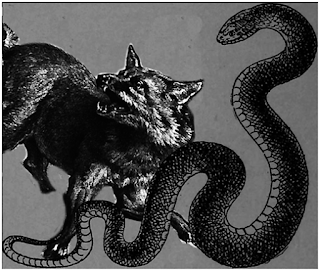
We interviewed Timothy Yeo, author of “The Fox and the Snake” in the Noir Fire anthology


TFF: What does “The Fox and the Snake” mean to you?

Timothy Yeo: Foxes are portrayed as cunning, and snakes as monstrous, and the commonality between the two is that they are both predators. The fox and the snake(s) in the story both fight to get the best of one another, and in the end only one will remain.

TFF: How obvious and how appropriate is it to combine the trickster (god? spirit?) character with the con or heist plot type?

TY: Fun fact: this story is based off a Japanese anime that resonated with me, and anime fans would know which one I am talking about. Anyhow, the melding of the supernatural and the mundane has always been something anime does well, and I hope it translates well to the page. These are fantastical events, made believable by very relatable concerns that occur in our daily lives.

TFF: What is the new year’s resolution that you most epically failed to keep?

TY: This is question is precisely why I don't make new year's resolutions. I note down tiny weekly goals instead.

TFF: What is the lost thing that you dream of re-finding?

TY: My childhood innocence. Somewhere in the bottom of the sea, I hope by now it hasn't whittled down to nothing.

TFF: Other than Noir and SF, what two (or more) genres would you like to see smashed together in a future anthology?

TY: Speculative and Mystery. A normally mundane puzzle can become so much more interesting when the supernatural is sprinkled on top of it.

TFF: What are you working on next?

TY: Short stories are a ton of work to craft, so I'm taking a break for now. Hopefully I'll soon be back, probably with a genre not too far off from noir.


You can find purchase links and more information about the Noir Fire anthology at http://press.futurefire.net/p/noir-fire.html

Friday, 17 June 2022

Micro-interview with Laura Gregory

Micro-interview with Laura Gregory, author of “Nightingale’s Lament” in the Noir Fire anthology.


TFF: What does “Nightingale’s Lament” mean to you?

Laura Gregory: Noir with a speculative twist gave me the freedom to re-examine expectations—why do we impose gender norms on mythological creatures? What if my femme fatale was nonbinary? How does that interact in a noir genre that traditionally leans a bit misogynistic? It was very meaningful to create an inclusive story in this new mashed up noir world.

TFF: Other than Noir and SF, what two (or more) genres would you like to see smashed together in a future anthology?

LG: Steampunk and Crime. I always enjoy the steampunk aesthetic and crime allows you to examine the spaces where society has failed its people.

TFF: What are you working on next?

LG: A portal fantasy novel full of nostalgic escapism and sarcastic unicorns.


You can find purchase links and more information about the Noir Fire anthology at http://press.futurefire.net/p/noir-fire.html

Wednesday, 15 June 2022

Mini-interview with Thomas Ha

We interview Thomas Ha, author of “Horangi” in the Noir Fire anthology.


TFF: What does “Horangi” mean to you?

Thomas Ha: There are several themes that drew me to write “Horangi,” but I think the core of the story is about the tension between how others view us and how we view ourselves. As someone who’s mixed race, I think there’s something unsettling that you learn from a very young age: who you are can feel like it depends on the perception of the person looking at you. I think I’ve heard someone compare it to living like an optical illusion, like the Rubin’s vase. When someone looks at me, do they see a vessel? Or do they focus on the surrounding space and see two faces? Am I Asian when I navigate certain contexts and situations? Or am I something else? I don’t always know, even now, as an adult. And as multicultural families and individuals have grown more common over recent generations, I think that’s something you hear or read about more often—a shared experience, that inability to control one’s own identity.

As I’ve gotten older, though, I’ve also become more interested in how that tension generalizes to others’ experiences too, beyond race. The grandfather in this story, for example, the Horangi, who is (very, very loosely) based on my grandfather—he experiences this kind of identity disconnect in his own way. The grandfather is the ultimate liminal being (and yes I know writers overuse the word “liminal” but I think it truly applies here). He bridges a world of folklore and the mundane; the culture of his home country and the states; the high class he once served and the low class he lives in afterward. So while the grandson character is going through a sort of childish, simplistic identity crisis—trying to prove his “Koreanness” to strangers at every turn, hyper sensitive to whether he “fits” in with his Korean family—the grandfather is navigating a similar, if not more complex challenge with multiple dimensions to it.

And in that context, what I like about the grandfather, and what I think the heart of the story is about, is his certainty of self. Despite what others see in him, he says with his words and his actions: “I am not an animal. I am not a criminal. I am a man who loves his family, and that is what I will be, your expectations be damned.” And I admire that in him.

TFF: Korean folklore obviously plays a large role in “Horangi.” What was your thought process in using that folklore here?

TH: I really wanted to use the Tiger, Horangi, for this particular story, because he’s a fascinating figure in Korean myth. Most often, he’s a violent threat or a temperamental fool, the villain really of numerous fables. On the flipside, there are also smaller stories and folktales where the Tiger is regarded as a powerful protector, someone who rewards humans for their loyalty, filial piety, and adherence to Confucian values. Likewise, in certain forms of art (minhwa), he’s simultaneously powerful and associated with aristocracy, but he’s also depicted as dumb and kind of goofy. He’s a complicated character and varies in his role depending on the tale and the context.

The Tiger’s also unique in that there are both themes of failure and striving for humanity in his stories that you don’t necessarily see with other characters. Whether in the founding myth of Korea (Dangun) or smaller fables (Horangi Hyungnim), there’s an element of the Tiger striving to emulate human characteristics and often coming up short. I have a soft spot for characters like these. The ones that try and don’t succeed. Part of why I wrote this story was to wonder a little, what would a character like that be like if he managed to become human in some form? How would he look back on his misdeeds, his mistakes, and how would he try to live his life if given more freedom in a new life?

TFF: In what ways do you view “Horangi” as a noir story?

TH: It’s funny. Even before the call for this anthology, when this piece was originally printed, I very much thought of this as a noir. I very consciously molded the Horangi in the vein of someone like a Philip Marlowe. Someone who’s lived a complicated life and navigates numerous worlds because of his experiences. There are echoes of other noir archetypes in the other characters as well—the Yongs are very much the guarded, high-class clients with secrets to hide. Kkachi and Tokki are like the info brokers and underworld characters who guide the detectives through different societal layers. And Mr. Kim is a combination of the hench-threat and victim—someone who is both a danger to others but vulnerable himself.

But most of all, I think of this as a noir because of the Hawai’i setting. Noir has a complicated history, but in cinema and literature, arguably has heavy, foundational ties with Los Angeles. And in noir fiction, LA is very much a city of contrasts. Much like the light and dark noir is famous for, early LA noir showcases a lot of glamour and opulence, as well as a parallel world of exploitation, economic extraction, and racial violence.

I think much of that is true of where I grew up in Honolulu as well. Yes, it’s a beautiful tourist destination with pristine nature, a melting pot of cultures, and a unique place to have called home. But it’s also the site of an illegal overthrow of a kingdom, foreign occupation, colonization, and militarization. I think there’s a whole category of Hawai’i noir that has yet to be explored about what lies beneath the surface that visitors perceive. The poisoning of resources (quite literally in the case of leakages of military storage tanks in Red Hill, most recently), the islands’ place as a node in the trans-Pacific crystal meth trade, the class and labor struggles that stretch back to the days of the sugar plantations. It’s a different gloss maybe, but at its core, that, to me, is noir.

One strain of “Horangi” that I didn’t manage to fit into this story, for example, is how Koreans themselves only recently freed themselves from Japanese occupation in the early 20th century, only to emigrate to Hawai’i and participate in the colonization of another society. I’m not sure that’s something my grandparents’ generation fully appreciated in the 70s and 80s. They thought of themselves as just moving to America. But it’s a complicated issue that I think more Koreans are coming to terms with in subsequent decades. That kind of dynamic between minority groups, cultures, economic classes, again, I think of that all as a driving force in noir fiction. I may not be the right writer to tell some of those stories, but I do hope that’s something future writers explore.

TFF: What are you working on now?

TH: I most recently had a science-fantasy story in Beneath Ceaseless Skies about a mother and son hunting alien con men, “To People Who’d Never Known Good.” Oddly enough, it might be that my most personal “diaspora” story besides “Horangi,” despite not having anything to do with my Korean background. I also have reprints coming out later this year: “Balloon Season” (originally in Fusion Fragment) coming out in PseudoPod and “The Liminal Men” (originally in Dark Matter Magazine) coming out in Fusion Fragment. After that, who knows what the future holds, but hopefully more short fiction soon!


You can find purchase links and more information about the Noir Fire anthology at http://press.futurefire.net/p/noir-fire.html

Monday, 13 June 2022

Mini-inteview with Valeria Vitale

Mini-interview with Valeria Vitale, editor of the Noir Fire anthology


TFF: Where did the idea from this anthology come from?

Valeria Vitale: I have always been attracted to the Noir genre, starting with the movies from the golden age of Hollywood. I liked the witty dialogue and, in general, the heavy literary influence many of these stories had. But what I look for in a story has changed a lot over the years, and some of those beloved classics now feel hard to watch or read: rampant misogyny, not-so-veiled racism, homophobia, ableism, exoticism and, really, any of the worst “isms” you can think of. And yet I still felt a deep connection to the genre, to its ability to look  the abyss in the eye and still re-emerge with the will to fight one more time. So I joined forces with Djibril and we decided that the world deserves better noir! That we can have stories that are bleak but beautiful and that don’t thrive on demeaning stereotypes but, on the contrary, show that progressive noir is not only possible but truly blossoming.

TFF: Is noir a natural partner of speculative and other “genre” fiction, or is this a deliberately discordant marriage of themes?

VV: A bit of both, maybe. There are some obvious matches, like noir and cyberpunk, that have so much in common that is sometimes hard to really apply labels. But I tend to like more experimental contaminations. Some are quite entertaining especially as noir, being so full of clichés, is also one of the most parodied genres. But other cross-genre stories are simply so graceful and they just… work so well that reading them becomes a special treat. You can surely find some neat examples in our anthology, if you’re curious!

TFF: If you could enter a film or novel, which one would you choose?

VV: I tend to like noir, horror and gothic stories but, honestly, I wouldn't really want to live in any of those settings! What I have sometimes dreamed of was entering in a fantasy world, where I can learn to fight with magic, build animated maps and have a talking animal companion that is clearly smarter than me. I would like to do something heroic, something that can, literally, save the world. Or die trying!

TFF: What is the shortest story you like to retell?

VV: I haven’t read it yet! But it will be the micro story that will win our tweet fic contest! Do you want to know more about it? Find all you need to know here: http://press.futurefire.net/2022/06/noir-fire-microfic-contest-giveaway.html

TFF: What fascinates you?

VV: I will borrow the words of one of my favourite directors, François Truffaut, who was also a very insightful critic and an avid reader: “When the same things are funny and melancholic at the same time, it's just wonderful.” I guess I find fascinating the kind of art that achives that, that makes you a little sad, but leaves your heart warm nonetheless.

TFF: What is the new year’s resolution that you most epically failed to keep?

VV: To adopt fewer dinosaur toys

TFF: What are you working on next?

VV: To get to know the city where I’m moving to in a few months! I’ll look for books by local authors, ideally set in the city itself. If I’m lucky, maybe I’ll find a couple of noirs!


You can find purchase links and more information about the Noir Fire anthology at http://press.futurefire.net/p/noir-fire.html

Friday, 10 June 2022

Mini-interview with M.L. Clark

We interview M.L. Clark, author of “The Stars, Their Faces Uplifted in Song” in the Noir Fire anthology.


TFF: What does “The Stars, Their Faces Uplifted in Song” mean to you?

M.L. Clark: In my earlier fiction, I was trying to figure out how to manifest characters who better represented my own sense of a subject-position, as an enby who really hates labels. I wanted to capture the feeling of being someone who carries many different performances of self who moves through a world where oppression comes in the form of many stringent hierarchies. All of this is background for me, though. Readers should still be able to enjoy it as is, as the story of a world-weary AI detective on an interplanetary case.

TFF: You have achieved an unusual take on (near) immortality in this story, managing to avoid both cliché and pathos. Do you think it is possibly to be both deathless and human?

MLC: I think we humans often go through periods when life feels endless, which—while obviously inaccurate—is a point of view contained within the human condition. I feel the endlessness of our struggles sometimes, the acute grief and weariness of knowing that we won't fix all the crises that need fixing in our lifespans. Being fleeting in a world of oppression that will outlive us is a delicate but important tension to explore.

TFF: Would you like to visit another planet?

MLC: Oh good grief, no. I haven't even explored enough of this one. I love the photography from all our wonderful, fearless bots, though!

TFF: If you could give life to an inanimate object, what would you choose?

MLC: I think I have to go with a house, since I live in Colombia, a land with a pretty famous depiction of a magical house (care of García Márquez). But it would have to be the right house, one that seems like it would have a good personality if it came to life. And not too much self-awareness, not enough to resent being conscious but unable to uproot itself. That would be hell for the poor thing. In fact, let's not give me animation-powers. I'd probably Monkey's-Paw it, and add to worldly suffering.

TFF: Other than Noir and SF, what two (or more) genres would you like to see smashed together in a future anthology?

MLC: We've had solarpunk, but I think we really need more solar nihilism, because solarpunk can fall into this idea that having cool new gadgets is enough. I want to see more worlds focussed on the deeper complexities of building sustainable future societies, but with our expectations of long-term change made much more realistic. We can't "stop" climate change, but we can mitigate its effects and ease its impact on the survivors. What will that look like in the stories we tell?

TFF: What are you working on next?

MLC: Currently trying to finish editing on another AI detective story, this one a novel that tackles neoliberalism through a future in which a highly market-driven alien species paves (Earthly) paradise and puts up an amusement park. One of the attractions is an AI character generated from a near-future movie series with a Bond-esque man-of-mystery. As he starts to realize what he is, and what's happened to humankind, he also has a mystery to solve for his employer. Ideally the first in a series, but we'll see if the markets are favourable to a story critical of markets themselves!


You can find purchase links and more information about the Noir Fire anthology at http://press.futurefire.net/p/noir-fire.html

Wednesday, 8 June 2022

Micro-interview with Damien Krsteski

Micro-interview with Damien Krsteski, author of “Siv Delfin” in the Noir Fire anthology.


TFF: What does “Siv Delfin” mean to you?

Damien Krsteski: “Siv Delfin” is an exploration of the fear of death, and a reminder that no matter how unpleasant that fear is, we owe it to ourselves and to others to face it and learn to live with it.

TFF: Other than Noir and SF, what two (or more) genres would you like to see smashed together in a future anthology?

DK: I'd love to see Hard SF and Horror mixed together.

TFF:What are you working on next?

DK: I'm working on a couple of longer stories set in the very near-future, centered on AI. It's an interesting experience, constantly trying not to be scooped by reality and actual progress in Machine Learning.


You can find purchase links and more information about the Noir Fire anthology at http://press.futurefire.net/p/noir-fire.html

Monday, 6 June 2022

Micro-interview with H. Pueyo

Micro-interview with H. Pueyo, author of “I Will Make You Remember Me” in the Noir Fire anthology.


Illustration © 2019 Dante Ruiz
TFF: What does “I Will Make You Remember Me” mean to you?

H. Pueyo: This story explores many themes that are important to me, like memories, exploitation and pain. More specifically, the desire to erase your own memories or keep them, and how the ghost of violence can keep haunting you in either case.

TFF: Other than Noir and SF, what two (or more) genres would you like to see smashed together in a future anthology?

HP: I would love to see unusual combinations with horror, especially those that add a certain tenderness to it, like erotic sci horror or horror/romance.

TFF: What are you working on next?

HP: Besides finishing the revisions of my novel and writing a couple of novellas, my bilingual collection A Study in Ugliness (Lethe Press) will come out by the end of 2022! And short stories, of course—always some short stories here and there.


You can find purchase links and more information about the Noir Fire anthology at http://press.futurefire.net/p/noir-fire.html

Saturday, 4 June 2022

Noir Fire contest and giveaway

To celebrate Noir Fire, a gritty speculative fiction anthology that combines the spirit of Noir with the fantastical, futuristic and progressive genres that we love, we are running a micro-fiction writing contest and book giveaway.

👁

The rules:

To enter the writing contest, write a micro-fiction in the Noir genre, as inspired by the aesthetic and tropes of Noir crime and thriller, from black & white Hollywood classics to cyberpunk novels, which should be both complete and short enough to include in a single tweet with the addition of the hashtag #firenoir. Bonus points if the story has speculative and progressive elements, in addition to traditional noir.

Eligible stories must be tweeted to the hashtag by midnight (any time zone) on Sunday June 19, 2022.

👁

The prizes:

All entries will be read by the contest judges, Valeria Vitale and Fábio Fernandes, who will pick one winner to receive paperback and e-book copies of the Noir Fire anthology, any one other Futurefire.net Publishing paperback of their choice, and e-book of Dan Grace’s mythical dystopian novella Winter, and up to two runners-up to receive e-books of the Noir Fire anthology, two other FFN anthologies of their choice, and Dan Grace’s Winter.

👁

(Editors and authors of the anthology, and staff of Futurefire.net Publishing, may post micro-fiction to the hashtag, but will not be entered into the giveaway.)

Friday, 3 June 2022

Micro-interview with Saleha Chowdhury

Micro-interview with Saleha Chowdhury, Cover artist of the Noir Fire anthology.


TFF: How did you go about designing and illustrating the cover for this noir-themed volume?

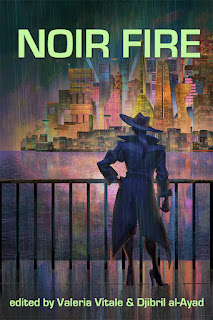
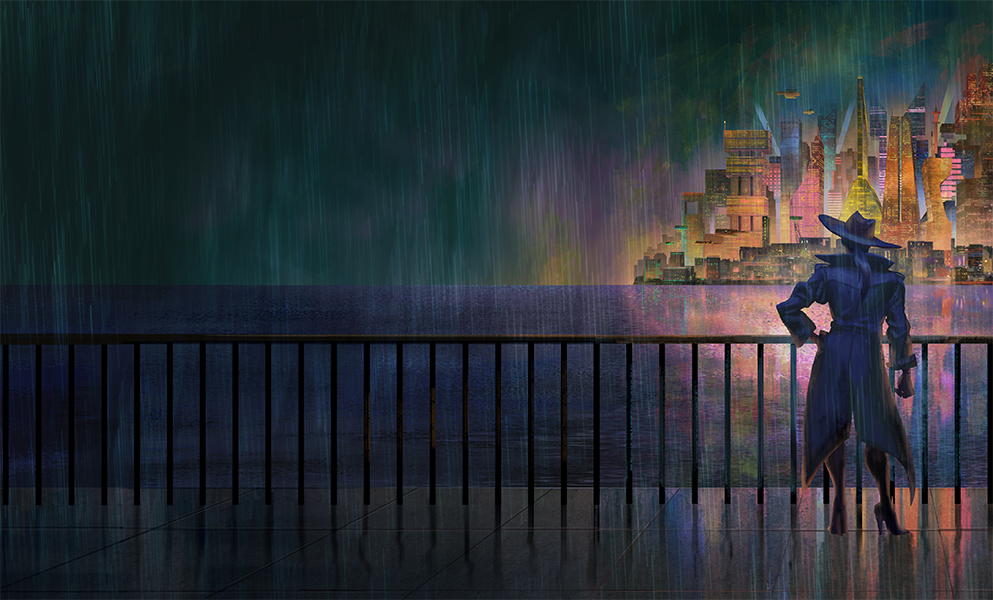
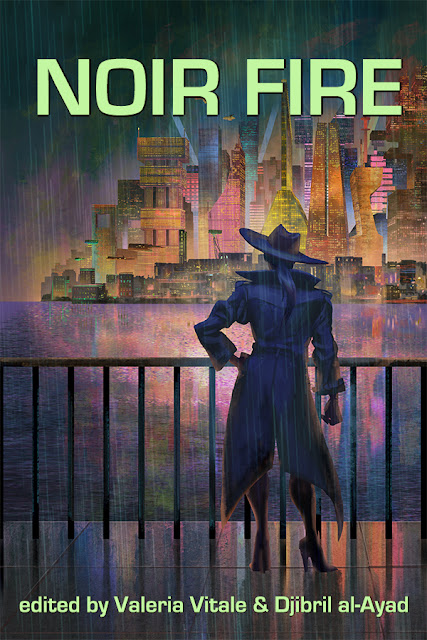
Saleha Chowdhury: I started by studying imagery surrounding noir-themed works paying attention to common motifs. Traditional imagery like rain, fog, and a cityscape were things I decided to include. Instead of a traditionally male character I chose to have someone more feminine with a sense of style all their own.


TFF: Have you ever seen a statue or a piece of art that you wished was alive?

SC: I wish some pieces of Jean Giraud's fantasy art were real. It would be really interesting to walk around in them and learn more about those worlds.

TFF: What magical power would you like to possess?

SC: I would love the ability to teleport and visit faraway places. Especially natural places that are really out of the way.


You can find purchase links and more information about the Noir Fire anthology at http://press.futurefire.net/p/noir-fire.html

Wednesday, 1 June 2022

Mini-interview with Lorraine Wilson

Mini-interview with Lorraine Wilson, author of “The Bone Children and the Darkness” in the Noir Fire anthology.


TFF: What does “The Bone Children and the Darkness” mean to you?

Lorraine Wilson: This story was my exploration of the grey area between villain and victim, looking at apparent monstrousness and apparent justice and seeing whether either of those things were 100% true. I also wanted to take characters who have been made monstrous by others and give them back their agency!

TFF: How rich is the connection between ancient Greek mythology and the modern cultures of the Mediterranean?

LW: I’d go further—Greek mythology is deeply connected to most of Western European culture. It’s taught in schools, used constantly in fiction, the names and idioms have entered our languages. It also contributes to idiotic things like western/British exceptionalism, which is ironic, but there we go.

TFF: Have you ever found or left a message in a bottle? Would you like to?

LW: Marine littering! No!

TFF: What is your favourite museum or art gallery?

LW: The ‘bones’ museum! Aka the Natural History Museum in London. For its contents, for the sheer beauty of the building, and for all my childhood memories of wonder.

TFF: Other than Noir and SF, what two (or more) genres would you like to see smashed together in a future anthology?

LW: I was recently part of an audio flash-fiction anthology Ghostlore created by the Alternative Stories Podcast—a ghost story/folklore mash up and it worked so well! I’d love to see that theme in longer form. Also noir/folklore… basically anything blending folklore into other genres is a win for me!

TFF: What are you working on next?

LW: I’m currently editing a ghostie novella set in Iceland, and about to return to editing my third novel, which is coming out next year.


You can find purchase links and more information about the Noir Fire anthology at http://press.futurefire.net/p/noir-fire.html

Monday, 30 May 2022

Mini-interview with Storm Blakley

Mini interview with Storm Blakley, author of “Salt and Smoke” in the Noir Fire anthology.


TFF: What does “Salt and Smoke” mean to you?

SB: It’s the first story I’ve ever gotten published, so It will always be special to me. I was honestly unsure my weird little ghost love story would ever find a home, and I’ll forever be grateful to the wonderful folks at Future Fire who took a chance on me.

TFF: Have you ever seen (or otherwise experienced) a ghost?

SB: My childhood best friend grew up in an old farmhouse that made strange, inexplicable sounds, and the family swore it was haunted. We would often hear what sounded like footsteps running up and down the stairs, but maybe it was just the old house settling. Maybe.

TFF: Have you ever tried to write or paint one of your own dreams?

SB: I wish I could! I don’t really remember my dreams; in my whole life, there’s only been a handful. I don’t think in pictures, so that kind of art is difficult for me, but I keep trying to learn how to paint and draw, and maybe one day I’ll improve.

TFF: What is the most terrifying thing about the sea?

SB: All of it! The ocean is absolutely terrifying, in every way; it’s so big, so unknown, unfathomable and indifferent, just chock-full of monsters that could eat me! We’ve mapped more of Mars than we have our own oceans; we know so little about our waters, and that’s a little scary.

TFF: Other than Noir and SF, what two (or more) genres would you like to see smashed together in a future anthology?

SB: Oh, that’s a good one. I think the lines between genres are rather blurry, and there’s fun to be had with any pair or more of genres. I’d honestly be excited for any mash-up, because it will make interesting reading, and it’d be fun to try new things.

TFF: What are you working on next?

SB: Everything! F and SF are my first loves, they’re what got me into reading, so I’m going to keep working on my projects there, but I also want to reach out past my comfort zone, and try new things, because trying new things is what life’s all about!


You can find purchase links and more information about the Noir Fire anthology at http://press.futurefire.net/p/noir-fire.html

Friday, 27 May 2022

Micro-interview with Lam Ning

Micro-interview with Lam Ning, author of “avenging the sorrow” in the Noir Fire anthology.


TFF: What does “avenging the sorrow” mean to you?

Lam Ning: It’s a snapshot of the world I know, and it’s a confrontation with the harsh truths of crime and conflict. In fiction it’s tempting to line up an acceptable target for elimination to create the illusion of justice served. In reality, I’m not sure justice exists.

TFF: There is a surprising amount of human goodness in this bloodthirsty story; do you think there’s something about desperation and shared suffering that also brings out sympathy and collaboration?

LN: Those who have been through it already know. Husbands have abandoned their wives when mortars fell; mothers have abandoned their children. But after the first exposure to a crisis, the mind begins to adapt, and we learn to breathe through the panic and shelter each other.

TFF: Who is your favourite kick-ass woman from history?

LN: “I was the conductor of the Underground Railroad for eight years, and I can say what most conductors can’t say—I never ran my train off the track and I never lost a passenger.” (Harriet Tubman)

TFF: What are you working on next?

LN: Something about a one-armed swordsman.


You can find purchase links and more information about the Noir Fire anthology at http://press.futurefire.net/p/noir-fire.html

Wednesday, 25 May 2022

Mini-interview with Frances Rowat

Mini-interview with Frances Rowat, author of “Late Night at the Low Road Diner” in the Noir Fire anthology.


Photo credit: Chelle Parker
TFF: What does “Late Night at the Low Road Diner” mean to you?

Frances Rowat: I find it really hopeful. I tend to miss the darker aspects in my own work, but really—it’s a chance encounter that starts out confrontationally and ends up with pretty much everyone involved better off once a few details about the magic of the world come out.

TFF: Do you use the ghost mythology/ritual in this story in other works? Or did you draw it from somewhere?

FR: I've got another WIP with two of the characters, and the rules of making something “real” show up there as well, but not in my other finished works. I don’t think I drew specifically from anywhere, but the idea of important things coming with a cost isn’t exactly uncommon.

TFF: If you had to invite the protagonist of your current work-in-progress to dinner, what would you cook for them?

FR: Awkward! The protagonist in question is a cook who is interested in mouthfeel and flavour profiles, but I don’t know how he tastes things. And I am really not a cook. I’d probably fall back on chicken with lemon-garlic noodles, and he’d probably be gracious about it not being remarkable.

TFF: What is your favourite optimistic science fiction work?

FR: I am terrible at narrowing things down to a favourite. But for graphic novels I’m going to say Mulligan and Ostertag’s Strong Female Protagonist, and for written work I will say Firebreak by Nicole Kornher-Stace. They’re not light, but the drive and hope in the characters are lovely.

TFF: Other than Noir and SF, what two (or more) genres would you like to see smashed together in a future anthology?

FR: My reflex is “horror and crime!”, but those are a little broad. So I’ll say stories of roads—road trips, travel, getting lost, or just Linda Wojtowick’s excellent “Byway” from The Ghosts on This Road podcast—melded with the dark fantastic.

TFF: What are you working on next?

FR: Honestly, it’s been hard to write lately—there’s a lot going on. I seem to be recouping a little, though, and I’m extremely grateful for that. Mostly I’m revising existing drafts, but I’d also like to revisit “Small-Town Spirit” and see what they do on Hallowe’en.


You can find purchase links and more information about the Noir Fire anthology at http://press.futurefire.net/p/noir-fire.html

Sunday, 3 April 2022

New Issue: 2022.61

“With a genre like film noir, everyone has these assumptions and expectations. And once all of those things are in place, that's when you can really start to twist it about and mess around with it.”

—Lana Wachowski

[ TFF Noir; Cover art © 2022 Saleha Chowdhury ]Issue 2022.61: TFF Noir

Short stories

Novelettes

Cover art by Saleha Chowdhury

Guest editorial by Valeria Vitale

Wednesday, 16 March 2022

Noir Fire: Cover reveal

The observant and deductive among you will have noticed that Futurefire.net Publishing have been plotting a noir-themed speculative fiction anthology for a while. The print and e-book anthology of 14 stories will appear in a few weeks time, and there will be a sneak preview of a few of the pieces in the next issue of TFF magazine at the beginning of April. Watch this space for announcement of the table of contents. In the meantime, we are excited to share with you the fabulous cover image, which was painted for us by the stunningly talented Saleha Chowdhury.

We wanted a cover image that captured the Noir aesthetic, but with a bit more of a progressive, cosmopolitan, inclusive feel to it; an image ambiguous enough to evoke science fiction or fantasy, but with an explicit cyberpunk ambience; perhaps a female or gender-nonconforming character who was not just a victim or motivator for a mourning male protag.

Saleha gave us all of this in spades, and so beautiful and with layers of creativity to boot! We couldn’t be more chuffed! As excited as we are to share the lovely stories with you, this is just the icing on the cake.

Just wait til you see the glossy high-res version on the cover of the book itself.

Tuesday, 29 June 2021

Tech Noir special: in conversation with Zoë Blade

Way back in 2013 we published a story that could have been a paradigm for the speculative, progressive Noir crossgenre, in the form of Zoë Blade’s “Terminal City.” Fittingly, as we prepare for the Spec-Noir themed issue of TFF at the end of the year, we have invited Zoë over to talk about Cyberpunk and Noir aesthetic, social justice and speculative fiction, and transhumanism, among other things.
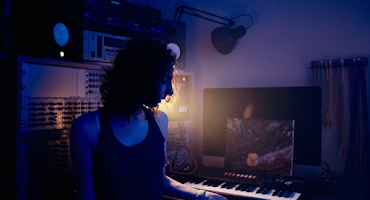

Zoë in the studioWhen she's not writing cyberpunk fiction, Zoë Blade can be found in her studio, making music for the leftwing side of YouTube.


The Future Fire: Would you like to talk a little bit about Terminal City to start out? We enjoyed this story not only because of the social-justice and dystopian themes, the alternative-history cyberpunk setting and classic Noir aesthetic, but also because of its unapologetically geeky and subculture references. It's also a powerful story in its own right, and it lets a little more hope creep in at the end than some Noir allows itself, but it by no means overturns the dystopian setting or guarantees a happy ending or improved circumstances for the protagonists. To what degree did you think about genre and aesthetic writing this story, as opposed to letting the plot and characters dictate elements like settings and environmental details?

Zoë Blade: Thank you! I think I started with an image in my head of someone using a public terminal in the rain. I'd read about the Esper machines in Blade Runner, how they were networked and performed all these other tasks besides zooming into photos. You can see a few in the film, but they're never mentioned. This was as interesting to me as anything in the film.

Companies, universities, and libraries used to have these big mainframes, that people would access remotely with dumb terminals instead of having their own computers. As a teenager, I was amazed when I first installed a Unix clone covermounted on a magazine. I got to play around with a tiny mainframe all of my own! It felt very empowering, the same way it felt getting my first home computer.

Another big part of the hacker community is phone phreaking, another large network you can only access in small glimpses. I'd also become fascinated by Kowloon Walled City, perhaps the most cyberpunk-looking place on Earth, a maze of rooms where everyone would steal everyone else's electricity and sublet wherever someone might conceivably fit, even in the middle of a diner or factory. So I kind of connected all these threads together.

At its heart, I think “Terminal City” is about a corporation trying to control a piece of technology, computing power, versus a flourishing community of street-level hackers trying to turn it into something everyone can use independently. It made sense to me to set it in an alternate history, where a phone company leased out accounts on their mainframe, that you could access via public terminals strewn throughout the city, and no-one had their very own computer, only leased terminals they could plug into their network and log onto their paid account. I think the main difference is that in real life, no corporation ever tried to suppress microchips, thankfully.

Perhaps it was mostly written out of frustration at what I saw as people ripping off the least interesting aspects of The Matrix. Behind the Bullet-Time effect and the violence was a tale of diverse hackers standing up against authoritarian white men in suits telling them who they couldn't be and what they couldn't do. In a BDSM club, naturally. Who doesn't want to visit that world?

TFF: What did cyberpunk mean to you? Is the character of the hacker an essential prototype, like the P.I. in Noir?

ZB: As a Brit who grew up in the eighties and nineties, it’s somewhat inevitable that I’d be immersed in the dominant popular culture of the time, hailing from the exotic lands of Japan and America. As a loner who enjoyed programming home computers like my trusty Commodore 64, my taste naturally skewed towards the usual suspects favoured by hackers: Blade Runner, Neuromancer, Ghost in the Shell, Snow Crash, Pi, and The Matrix. They feature hackers as heroes, an escapist fantasy for technically-minded shut-ins. And as a transgender woman, I naturally gravitated towards stories of people who modified or outright abandoned their own bodies, and questioned who they really were in spite of how others treated them.

It was only years later, as an adult, that I learned Brits and Americans had feared Japanese businessmen taking over their corporations, something they projected onto everything from Brazil to Die Hard. As a child, that fear completely went over my head. Of course the future was Asian. Watching Dominion: Tank Police, with its female protagonist, I’d associated more with that imagined world than any of the American ones.

As for the hacker: I try to avoid using the generic archetype characters I've seen mentioned in writing guides (“hackers are tricksters like the mythological Loki”) in favour of what I know: hackers tend to be technically knowledgeable yet socially naïve people who wield a lot of power with reckless abandon, for better or worse. I think that covers everyone from Aaron Swartz to Zuckerberg.

TFF: We’d like to ask you more about the relationship between body and identity, which is a popular trope in Cyberpunk, from machines that gain consciousness (or become more human than humans), to people trying to replicate or download their memories and feelings. How do you feel this concept resonates with those who have made the decision to modify or otherwise redefine their bodies?
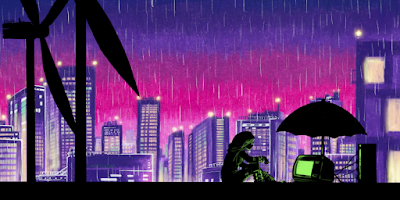
Terminal City, illustrated by MonosílaboZB: I suspect I'm far from the only transgender woman who felt Major Motoko Kusanagi from Ghost in the Shell resonated with her. Though in a way it's reversed, as she wasn't convinced she had a human brain, and felt that how other people treated her was what granted her humanity; whereas transgender people generally spend a lot of time and anguish working out exactly what and who their brain is, in spite of other people's disbelief.

What always seems absurd to me is how many cisgender people consider themselves to be transhumanists, imagining themselves to have escaped the rigid bonds of being overly attached to an unmodded body... and then proceed to be transphobic without missing a beat. If you're against people overriding their own endocrinological system, then what exactly do you want to allow people to do? I think for most transgender people who overly think things through, it's a natural extension to be very much in favour of everyone's bodily autonomy. A lot of us have firsthand experience of its necessity for happiness or even any kind of normal life.

It's also obviously a nice fantasy that you could transplant your brain into a body that hasn't been damaged from being on the wrong hormones, but allowing young people to block the wrong ones before they can take effect has presumably diminished the need for such escapist wishful thinking.

TFF: Cyberpunk literature and popular culture have probably made us imagine artificial intelligences as an expression of rigid objectivity. But now that we can actually see AIs at work, we see that they simply replicate the same biases that appear in the data that were fed to them. Do you think that this changes the way we look at AIs in cyberpunk, not as superior ethical and objective beings, but bearing the baggage of all our worst prejudices, power imbalances, and other ugliness?

ZB: I think there are two quite different concepts of AI here, leading many people to talk at cross-purposes. Cyberpunk imagines a general-purpose AI that's roughly analogous to a human brain: simple parts, replicated billions of times, interconnected. Like a human child, this new kind of lifeform would need to be carefully nurtured and loved in order to grow into a responsible adult. The main issue there being that only corporations and perhaps governments could afford such technology, at least at first, and they are far from loving parents. Raising a human child in such an environment would be unconscionable, and the scenario isn't improved with that child having thought processes that are utterly unfamiliar to us, and eventually far smarter than us.

What we instead currently have in real life are small, specific bits of computer code that were rapidly evolved in an automatic training process. You tell a computer “here's somebody doing a thing. Please write some random code and tinker with it until it does more or less the same thing as them.” All we've managed to do there is automate the biases of the person whose work is being replicated. All this technology, and we've simply automated racism. It's bias laundering, so managers can say “see? This machine's doing the same thing, and it can't be prejudiced, it's a machine.”

A third option I'm hopeful for is some kind of artificial intelligence that can look at the big picture and point out our biases. That can sift through all the data out there and work out various things we've misinterpreted, or that are statistically suspicious. Something too smart to say “Bob's giving more jobs to people named Greg than Lakisha, so I'll do that too, as presumably Gregs must be better at the jobs.” Instead, it might say “Bob's giving more jobs to people named Greg than Lakisha, so let's work out why this correlation exists,” then it would go off and look at all the worldly data it can find, and finally show how racism and sexism have tarnished all our knowledge and actions. But then, we don't need a machine to tell us that the system's rigged. We need to listen to all the minorities who have already been telling us for a very long time.

TFF: Is cyberpunk basically “tech noir” then?

ZB: Cyberpunk’s aesthetic is solid Noir. Hidden beneath the glamorous façade portrayed elsewhere, the seedy underbelly is populated by far more relatable characters, denied a place in mainstream society. Forced into black markets just to survive, their lyrical street slang obfuscates the illicit work demanded from them, at once publicly punished and privately required by polite society, from the sex work that exploits their perceived exoticism through to the corporate espionage that requires their unique skills.

The aesthetic is an easy sell, a cluttered mess of smoke, rain, neon, cables, litter, and the violence that inevitably engulfs black markets. The harder pill to swallow is that these seemingly superficial trappings are inexorably intertwined with the all too real poverty and discrimination endured by people denied legitimate jobs. It’s a genre of underdogs, relatable realism for some, poverty tourism for others. Because even your suffering is a commodity to be packaged and sold.

At the heart of the genre are clones, robotic replicas, and wholly new AI, all trying to break free of their bonds, placed on them by the all-too-human heads of megacorps and zaibatsu, who fully expect them to be as oppressive as themselves. While the fear of being literally inhuman is a modern one, being treated as such is all too real for many people.

Blade Runner is the epitome of this future noir, showing someone mercilessly hunting freed synthetic slaves only to have his own humanity in turn questioned. The aesthetics, themes, and plots are inseparable. Cyberpunk expresses our fight to have our humanity recognised, and our freedom granted.

TFF: Is there something else you’ve worked on recently that you’d like to tell us about?

ZB: Let’s go with Inhuman, a comic about a Japanese hitwoman who wakes up to discover she’s a synthetic replica of her former self, who her client is trying to kill. Which corporation would you want to have full autonomy of your body?

When an assassin regrets killing her latest target, she discovers how hard it is to quit her job and go freelance.

At its core, Inhuman is a story about a woman who has a phobia of electronic recreations of people, only to wake up one day to discover she's been made into such a recreation herself. She has to team up with her original human self in order to work out why the corporation she was working for robbed her of her body, and expose their secrets.

I originally wrote it as a screenplay, but as it's an original property and would need the kind of ridiculously high budget reserved for established franchises, I'm currently working with my regular artist Monosílabo to turn it into an online comic book. We’ll hopefully be sharing it soon on our online media, including https://twitter.com/zoeblade and https://twitter.com/monosilabo_art.

TFF: Thank you for joining us, Zoë!


If you fancy your hand at some speculative or progressive Noir short fiction or poetry, please consider sending something in for the TFF-Noir themed issue this year.