Guest post by Liz Gloyn
Liz Gloyn, Senior Lecturer in Classics
Royal Holloway, University of London
As I have been thinking about the manifestations of classical monsters in the modern world, one critical thing I have learned is that they have an unhealthily co-dependent relationship with their heroes. Monsters are often ported into narratives purely for the hero to slay them; retellings of classical stories frequently take the moment at which a hero slays a monster as the story’s anchor. Perseus and Medusa, Theseus and the Minotaur, Hercules and a wide variety of supernatural fauna—although the slaughter of one by the other is predicated by the mythic tradition, they have clung to each other to survive through the centuries.
But now, in the twentieth and twenty-first centuries, are we starting to see monsters break out of this toxic relationship? Certainly, more classical monsters are making lives for themselves in which they distance themselves from their heroes, or where the story they have to tell decentres conflict and death. I wonder how much of this is due to a relatively recent move in representations of monsters which has started to see them as sympathetic, enticing characters. Vampires are perhaps the best example; from Anne Rice’s brooding and sensual
Vampire Chronicles, the erotic horrors of
The Hunger (1983), and the sparkly romance of Stephenie Meyer’s
Twilight saga, the act of being transformed into a monster has become something to be courted rather than avoided. As the balance between fear and desire has begun to shift, monsters have become more complicated, less obviously evil.
The parallel development has been that we have started to see that the heroes are less nice. For the ancients, this would not have come as a surprise—they knew Hercules was horrible to his family, that Odysseus was duplicitous and self-centred, and they talked openly about these men’s failings as much as their virtues. However, nineteenth century versions of classical myths sanitised and valorised heroes, mainly so they could work as moral exemplars for impressionable youths; as such, heroes’ violence, white supremacy and patriarchal abuses were celebrated as worthy of emulation. Looking at these heroes and their sense of self-entitlement, their belief in their own right to trample over the earth and take whatever they felt like, the injustice of their actions and the way some post-classical cultures have uncritically honoured them now makes their heroism look much less appealing.
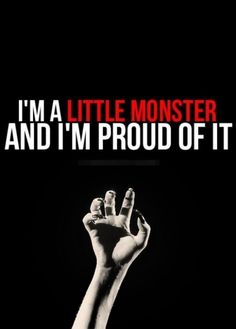
The general question of who gets to be a hero, and what makes someone heroic, turns our gaze back to the monster—because maybe, just maybe, monsters get to be heroes as well. Again, this is part of broader patterns of reclaiming what society might consider monstrous. There is a long tradition of coding monsters, particular in Hollywood cinema, as queer, giving LGBT+ audiences the uncomfortable experience of identifying with a villain only to see them vanquished as part of a heteronormative plotline. In recent decades, the LGBT+ community has reclaimed monstrosity—just think of how much Lady Gaga means to her Little Monsters who feel alienated and marginalised because of their sexuality—and with that reclamation comes power. Power to see the monster as important and valuable in and of itself, rather than simply as a victimised adjunct to somebody else’s story.
Where does this leave classical monsters? Certainly they will always be connected to their heroes; they have been fellow travellers for centuries. But perhaps we will see, in retellings of their stories in future years, a loosening of that binding, a relaxing of the tie, a shrugging off of the conventions which claim the classical monster’s only value lies in its defeat. Perhaps, after watching the catastrophic effects of letting heroes tell us what to do, it is time to see what lessons the classical monsters can teach us.
Liz Gloyn’s essay “Caught in Medusa’s Gaze: Why does the ancient monster survive in the modern world?” appears in the Making Monsters anthology.
 It’s been just over a year now since the Making Monsters anthology of stories, poems and essays featuring classical monsters was published. Co-edited by Emma Bridges of the Institute of Classical Studies and Djibril al-Ayad, this unusual mix of fiction and nonfiction has been quite widely read and acquired by academic libraries (e.g. HARL), and was one of the most fun publications to work on as an editor.

