Monday, 14 May 2012

Guest Post: Decolonizing as an SF Writer

As I write this, I am thinking of a young writer somewhere in the world who comes from a country just like mine. I write reflecting on the process of decolonization that I am going through as I consider history. This look back may be painful and I may have to face unhappy truths, but still it is important. I need to understand the source of the pain, to accept it, embrace it and find healing so I can reclaim what is mine and become the writer that I want to be.

#

Towards the end of the Marcos regime in 1986, Filipinos marched through the streets protesting not only against the dictator, but also against the continued presence on our shores of the American bases and the perpetuation of American influence on Filipino politics and economics.

While history tells us that we were granted independence in 1912, we know for a fact that the Americans never truly intended to surrender their foothold in our country. Their presence in the Philippines was guaranteed by the acquisition of a lease that granted them permission to establish and maintain Military bases in the Philippines.

In 1991, this lease expired and as the newly installed Philippine senate refused to grant an extension of this lease, America was forced to vacate the bases. Ostensibly the Americans have left, but they haven’t really left us and what the American occupation has left behind is a great wound on the cultural soul of the Philippines.

Mark Twain, in his essay, To the Person Sitting in Darkness, speaks out against the Imperialism of the United States and in particular against the actions taken by the Americans in subjugating the Philippines and appropriating the victory of the Filipinos against the Spanish colonizers.

Mark Twain writes in his essay about the mindset of America in those days: We have got the Archipelago, and we shall never give it up.

When I read this essay, I can feel the bewilderment of the patriots who had fought and won the war against the Spanish, and I feel utter sorrow in knowing that our supposed allies painted us as being uncivilized and not fit to rule our own country. I also feel indignation on behalf of the soldiers who fought against the Spanish and who realized that they were facing another, more insidious enemy. The thing is, where Spain very clearly presented themselves as conquering overlords, America presented itself as a friend. It was an excellent strategy which confused us completely because what they did to the Filipino was a betrayal of that word “friend”.

Perhaps this explains why there is a keen edge to the anger we feel when we look at this history. We love and yet we cannot love because on the one hand, there is the face of friendship and the knowledge that the Americans were our allies. On the other hand we see the face of the trusted friend who betrayed us. We realize that we were never considered equals but in the eyes of our white allies, we were savages to be treated as children and to be condescended to as “the little brown brother”.

I quote history because as an SF writer who comes from a nation steeped in colonialism, this history is relevant as I seek to reclaim indigenous narratives and to break the impositions of colonialism on my culture.

In his book, “Oral Traditions of the Ifugao”, Manuel Dulawan writes of the colonization of the Ifugao and how the Americans employed public education as a means to neutralize and to Americanize the people. This move was so effective that subsequent governments adapted the principles set down by the American education system without realizing just how much damage this had done and was doing to the existing indigenous culture.

Dulawan writes: They have been brainwashed in the schools and in the churches and made to believe that their culture is backward and not worth keeping or learning. As a result, their sense of cultural values is disoriented.

He describes the effects of this cultural brainwashing as being traumatic, sad and painful and writes of how many of those who inherited or adopted the Christian religion assume the conditioned belief that anything of Ifugao cultural origin is either no good or inferior.

In Ifugao culture, the passing on of traditions and rites are done by native priests who are called Mumbaki. They are assisted in this by the elder tribeswomen who are also trained in the oral tradition. In the past, young girls would spend time with the elder women who taught them the traditions, the chants and the songs. Young boys were sent to spend time with the Mumbaki who passed on to the next generation the oral literature, the rituals of the tribe and the practices which were inherited from the forefathers.

During the American occupation, the passing on of the oral tradition was suppressed as the native priests and their rituals were demonized not only by the white colonizer but also by the white missionaries who followed in their wake. This meant that the true traditions and the original culture were slowly overlaid with the glaze of white culture and white belief.

Add all this up and it is no wonder that the psyche and the culture of the Filipino is so scarred and wounded to the point where we see the white and the west as being superior to us in all things.

Reading the history of conquest and colonization is a traumatic experience for the colonized. The Philippines went through not one, but two colonizers. I wonder how many colonizers other countries had to endure.

From reading these histories, it becomes clear to me that the erasure and subjugation of existing indigenous narratives were prioritized as these were viewed as being rival to the colonizing power.

Before the coming of the Americans, the Philippines had already endured four hundred years of colonization under the Spanish regime (1521-1898). It was a colonization that started with the suppresion and the eradication of many of our indigenous culturebearers. Where the American colonizers sought to erase the indigenous culture through the use of education, the Spanish brought with them Spanish friars with the intention of subjugating and exerting influence on the native Filipinos through the use of religion.

Reading this part of my country’s history, I see how the image of the strong indigenous Filipino woman was slowly and surely erased to be replaced by the idealized and hispanized version of what a Filipina should be. The liberated women of our country were shamed and called lewd and bad and this Christianization inflicted a sense of shame and lesser worth in us.

In her essay “Silencing the Babaylan”, writer Gemma Araneta Cruz writes of the Babaylan and of the Spanish response to the presence of the Babaylan: Fray Alzina (the Spanish priest) and missionaries like him saw that the babaylan was a formidable obstacle to Christianization who had to be discredited, if not destroyed and forever silenced.

Who are these Babaylan and what role do these women play in the cultural life of the Philippines?

When these Spanish friars came to the villages, they noticed the presence of strong women of influence. These strong women were the Babaylan who not only had the power to heal, they were the authority on mythological and cultural heritage, they were the harbingers of ritual and they knew astronomy.

It was during these encounters that the Friars saw how the Babaylan were a major force and a possible obstacle to their goal of hispanizing and subjugating the archipelago. It was then that the decision was formed to disempower the Babaylan.

In “Betraying the Babaylan”, Araneta Cruz describes the technique of divide and conquer which the Spanish employed to disempower the Babaylan and effectively erase them. The first thing that the Spanish did was to alienate the effeminate Babaylan from the women priestesses. They also gained the support of the tribal elite in their cause to wipe out the Babaylan through the use of bribery and promises of power. With the male Babaylan and the elite on their side, the Spanish friars went on to accuse the Babaylan of being of the devil and of practicing witchcraft.

While I narrate events that are specific to the Philippines, I find myself wondering if such events were also mirrored in countries that were colonized by foreign powers. How pervasive is that other culture? How much has it stolen from or killed of the original culture?

When I look at my country, I see how much these things have harmed our psyche and I also see the resilience of our culturebearers who employed whatever means was at their disposal to preserve our culture. Even so, the wounds have spread deep and there are certain things that demonstrate to us how deeply rooted colonialism is.

Even to this day, we see young women buying whitening creams because white is perceived as the ideal color. I long to tell my fellow Filipinos, there is nothing more beautiful than kayumanggi (brown).

At Eastercon, a good friend asked me who I wanted to read my work. It was a question that was unexpected and perhaps because I didn’t expect it, I gave the answer that came quickest to me. I want Filipinos to read my work and in particular, I want the people from Ifugao to read my work. Of course, I amended, I want everyone to read my work, but when I write, I am always thinking of the Philippines.

When I heard of the We See A Different Frontier project, I was immediately attracted to the premise of an anthology that seeks to bring attention to stories coming from people and places who have endured colonization.

As a Filipino writer who engages Science Fiction, I see myself in conversation with the SF that comes from the West. A great part of existing SF narrative is that of the colonizer, but my narrative is one wherein I strive to reconcile my decolonization with the truth of my country’s history, the reality of where I am now and my vision of where I want to be.

I may transgress against the rules of SF because there are many things that I do not know about Science Fiction. I did not grow up surrounded and soaked in its language as Science Fiction fans and writers from the West. But I do know what SF looks like when seen with the eyes of the decolonized. It is a different SF, but it is still Science Fiction. As my Clarion West instructor, John Kessel said: Science Fiction is when I point to it and say that’s science fiction.

It is easy to be intimidated, and it is a struggle not to be so. And that’s why I think it is important for a writer of color to see other writers and fans of color in the field of Science Fiction.

In the course of this journey, I have been told that I need to learn English better. That I can’t possibly grasp the nuances of the English language the way a native English speaker does and that I will never be published as an SF writer.

And then, there are people who say that because I write in English, my narrative is contaminated and no longer true to the culture I come from.

The people saying those things may believe those things to be true, but I persist because I hear the voices of those who have admonished me from the moment I engaged this genre.

I hear the voice of my elder sister telling me: Don’t be stupid. Is this your dream or what? Are you going to let yourself be silenced by those words?

There is my precious grandaunt who told me: there are no limits. If this is what makes you feel passionate, then you must keep on writing it.

And there are dear friends like Aliette de Bodard who, when I was thinking of giving up, asked me: So, are you going to wait until someone else appropriates your culture? 

And so I go and commit SF yet again.

#

*This essay was inspired by a twitter exchange between Djibril al-Ayad, Kate Elliott, Requires Hate, Aliette de Bodard and I.

Rochita was the first Filipina writer to be accepted into the Clarion West Writer's Workshop. She attended the workshop in 2009 as the recipient of the Octavia Butler Scholarship. Her short fiction has been published in The Philippines as well as outside of The Philippines. She has a livejournal at http://rcloenen-ruiz.livejournal.com

This essay is also cross-posted to Kate Elliott's blog where there may be further comments/discussion.

Thursday, 10 May 2012

Guest post: International SF - A Modest Proposal


I’ve been doing a lot of thinking lately regarding difference in SFF – after all, that’s what happen when you start a project called WE SEE A DIFFERENT FRONTIER (if you still don’t know what’s that about, please check here and here). Being part of a global Science Fiction and Fantasy community, you come to expect a great conversation to ensue between people from all over the world – but that doesn't always happen (aside from social networks like Twitter). In fact, although there is SFF of good quality (and quantity) all over the world, most of this material is never read beyond the borders of their home countries, and there seems to be little interest in having them translated to other languages. The Science Fiction & Fantasy Translation Awards crew is doing a great job of raising awareness in the English-speaking world about that, but it’s a big, hard job and their role is not to publish translations.

In countries like Brazil, we do a lot of translations – mostly from English, but also from French, Spanish, German and Italian. As a result, there is more International SFF in our bookstores’ shelves than Brazilian fiction. Can we say the same thing of an American or French bookstore? Of course not.

A few days ago, Lavie Tidhar posted on Twitter a comment on his experience regarding Non-Western SF panels in conventions. Quoting him:

“non-anglophone panel==how can i (english person) get my stuff published in your country.”

In Brazil’s case, this is easier than you could think – there’s LOTS of publishing houses looking forward to translate American and British SFF, for example (Fantasy is trending HUGELY in Brazil since Harry Potter, Twilight and, now, for an older audience, with Game of Thrones – SF, alas, not so much). But I wonder – would a Latin American writer find the same easy environment in which to get translated out there? The answer, unfortunately, must be no again.

That’s why I, in a sort of rant, wrote a week ago the manifesto below (or a mini-manifesto, since it’s small and a kind of a draft – I still want to elaborate it further, but the Locus Roundtable and The Cogsmith Roundtable (thanks to Karen Burnham and to Djibril al-Ayad, respectively, for organizing them) prompted me to join in the discussion with a modest proposal, namely:


How to End International SF in Six Steps – A Mini-Manifesto
Fabio Fernandes


1. Accept and embrace diversity. All kinds of. Why? Because it’s there. It was ever there. Here, there, everywhere. It’s all around us. And you are part of it.

2. If your native language is English, please do yourself a huge favor to learn at least one other language. It’s not as hard as you’d think. It’s not Matrix-easy, but that’s the beauty of it: you only really learn it by practicing it. And one of the best ways of practicing it is with native speakers. And that’s when you can learn more about other cultures.

3. Speaking of cultures: no culture is superior or inferior to any other. But you already knew that, didn’t you? You only assume that, if you are, for example, a First World citizen, it’s only your duty to humanity to be kind and to help every which way you can the poor citizens of the Third World. Doctors Without Borders is an excellent way to do so. I highly recommend it. You can even help your own poor, because there is hunger in the First World as well (but you already know that). But, in fiction, don’t take anything for granted. Of course conditions may vary (and they will), but people’s needs and emotions are the same wherever you go.

4. One of the reasons why International SF has the “international” in it is not just because it is from all over the world, but because it is so rare to see it in shelves of Anglo-American bookstores. Well, that should have ceased to be a problem for quite a while now, cause, see, we have thing called the webz. And the webz can be good. But, if the native English speaker must learn another language, the non-native English speaker (who, in most cases, can speak English to save her life, but that’s just it) should walk the extra mile and learn to write (or to translate) her stories to English. English is not going away. (Although it will probably change and mutate in the next decades and becomes something very, very different by the end of the century, but we probably won’t be here, so let’s focus on the present, shall we?)

5. Writing in English really won’t matter much if non-Anglo speakers don’t do a little more to participate in the global conversation. For example, did you know that ANY SFF NOVEL, REGARDLESS OF THE LANGUAGE IT’S WRITTEN IN, can be nominated for the Hugo Awards? Will it really make a difference? Not in the first few years; not even in the first decade. But eventually it will generate a buzz. A teeny, tiny, persistent buzz. Something that will make people want to learn that language or to have that novel translated so they can read it. And then something may happen. (Before anyone says I’m a Hugo-lover, let me clarify: Yes, I am. But I’m open to conversation about Nebula, Arthur C. Clarke, Ditmar, Aurora, and whatever awards you may happen to remember.)

6. Maybe we should just stop calling it International SF and just call it SF.


Fabio Fernandes is an SF writer, and he will be guest editing a special edition of The Future Fire magazine dedicated to colonialism in science fiction. TFF put up a Peerbackers project to raise enough funds to make this a professional rate-paying anthology for authors and artists from outside of the mainstream.

Sunday, 6 May 2012

The Killing Moon – Death to Order


Following on the success of her 2011 Hugo and Nebula awards nominated The Hundred Thousand Kingdoms from  her Inheritance Trilogy, N. K. Jemisin’s new novel The Killing Moon, was officially released to rave reviews this week. I was lucky enough to receive an ARC, so when Future Fire editor, Djibril al-Ayad suggested I write an essay about some of the themes instead of a review, I was delighted. 
 
In interviews and guest blogs, Jemisin has talked about how wanting to write about ninja priests evolved into a novel about a priest who brings death with love. 

“And the clincher of his character was that he wouldn’t be doing it for some paltry material reward or to satisfy a bloodthirsty god; he would be doing it because he cared. He would intend only the best for his victims; indeed, he would be trying to save them from a far worse fate. He would love them. And what could be more effective — or relentless — than an assassin motivated by love?”

The book as a whole touches on so many important themes: religion, abuse of power, fratricide betrayal, the meaning of family and love, and the struggle to protect a way of life. The issue which resonated most powerfully with me, however, was the idea that the time and manner of one’s death could be chosen, either by an individual or by others. By another name, this is a topic most of us are familiar with – euthanasia.

Most of us in the SFF community are aware of Sir Terry Pratchett’s  campaign to win the right to decide when and where to end his life before the Alzheimer’s that has attacked him destroys his mind. Currently the UK government forbids this. 

In last year’s BBC Two Documentary, ‘ Choosing to Die’, Pratchett sensitively tackled the extremely complicated issue of euthanasia. He declared from the outset that, in his opinion, the timing of his death should be his choice, not the government’s.

We also saw footage from his visit to the Swiss euthanasia group Dignitas, and watched the death of 71-year-old millionaire Peter Smedley – a sufferer of motor neurone disease.
The Guardian article makes the point that death in this type of environment does not come cheaply. 

Of course, for many terminally ill people, the warm, safe, relatively pain-free death offered by Dignitas is not an option. It costs around £10,000 and many could either not afford it or would not wish their families to have to pay for it.

In the Killing Moon, the Gatherer Ehiru provides this service almost for free, out of love. He serves the priesthood of the Goddess Hanaja. In the book we are told that many, especially those in pain from terminal illness, see the coming of the Gatherer as a blessing.

But there are others, for whom the right to decide has been abrogated. Family members at the end of their tethers and resources may decide that it’s time to send old grandpa on his way to the land of dreams, Ina-karekh.  Or, in other more ominous situations, a contract is requested for  political reasons, making the Gatherers into de-facto assassins, something many people in the city of Gujaareh regard them as in any case.
Ehiru frowned. “Women need no Gatherer’s assistance to reach Ina-Karekh--”
“In this case the commission is requested as a kindness, both to her and to her city. Her soul is corrupt, the supplicant says.
“Has an Assay of Truth been performed?”
“Unnecessary. The supplicant is beyond question.”

We also meet Talithele, the ailing mother of the circus caravan leader that helps Ehiru, his apprentice Nijiri and the Kisua diplomat Sunandi escape from the soldiers of the corrupt prince. When Ehiru offers to relieve her pain by sending her to the Land of Dreams she vehemently refuses him, preferring to experience all that is life for as long as she can.

Jemisin has spread out before us four possibilities for dying. Which would we chose? And what are the political implications of each? In The Killing Moon, the Gatherers are able to do their work because they are supported by the dominant religion of the community. In out real world choosing death by suicide is forbidden or frowned upon by many of the world’s religions. Would getting the Pope or Archbishop of Canterbury to amend their views make euthanasia more or less likely?

More troubling is the second example. Would easing the prohibitions on euthanasia result in more families deciding that Granny could no longer make an informed decision and sending her on her way, with or without her consent?

And finally I don’t think we can discount the possibility of some governments deciding to ease the suffering of deranged dissidents or political challengers with an easy send off. Clearly the issues swirling around the topic of euthanasia are many and complicated. Jemisin’s book doesn’t offer any answers but it does prod us to think about the questions.

So, what would you chose?  I personally share Pratchett’s concerns. My greatest fear is to end up bed-ridden and unable to communicate. Would I chose euthanasia if it were offered? I don’t know. Do read N. K. Jemisin’s brilliant new book, The Killing Moon; then we can talk.
The Killing Moon, N. K. Jemisin, May 2012, Orbit Books
 

Wednesday, 2 May 2012

And the Winners Are...

We did the draw for the signed books giveaway last night, and the lucky winners (all drawn from generous donors over the past five days) are as follows:
  • Kelly Jennings’s Broken Slate goes to Alicia Cole
  • Catherine Lundoff’s Silver Moon goes to Siobhan NiLoughlin
  • Tim Maughan’s Paintwork goes to Ryan Baumann
  • Sophia McDougall’s Savage City  goes to Heidi Cautrell
  • Ian Sales’s Adrift on the Sea of Rains goes to Dylan Fox
Congratulations to all of our winners, and thanks to the generous authors and publishers who donated and signed the books, as well as to everyone who has backed the We See a Different Frontier fundraiser so far. We'll have more prizes and incentives coming soon!

Wednesday, 25 April 2012

Signed books giveaway draw

Several fantastically generous and supremely talented authors have donated signed copies of books for us to give away to help encourage donations to the We See a Different Frontier peerbacker. We're holding a prize draw to let you win one of these titles, and all you need to enter is to back our (very worthy) project—we plan to publish a colonialism-themed anthology of new speculative fiction from outside the first world perspective, guest edited by Fábio Fernandes—to the tune of a few dollars.

Prizes:
  • Kelly Jennings’s Broken Slate (about; donated by Crossed Genres)
  • Catherine Lundoff’s Silver Moon (about)
  • Tim Maughan’s Paintwork (about)
  • Sophia McDougall’s Savage City (3d pt of Romanitas trilogy)
  • Ian Sales’s Adrift on the Sea of Rains (about)
How to enter:

Email or comment to let me know when you donate to the Peerbacker. You will be assigned one "ticket" for every $5 you donate; if this is not your first donation to our appeal, you will receive one extra ticket as a thank you. This is in addition to the usual rewards for donating to peerbacker, of course. If you already own or for any other reason are not interested in receiving one of these titles—e.g. you wrote it!—let me know in advance and I'll try to make sure you get something else if you win. The draw will be made, using the tried and tested method of scraps of paper in a battered top hat drawn out by a disinterested and innocent party, on or shortly after May 1st. Each ticket drawn from the hat will win one of the signed books, to be sent in the mail. Judges' decisions are final, and all other usual disclaimers.

We hope there will be more giveaways and other fun to be had in the next few weeks, so visit this blog or the peerbacker site regularly for updates. If you have anything you'd like to contribute to a future contest, giveaway or promotion, please get in touch!

Monday, 16 April 2012

Artist Interview: Cécile Matthey

Cécile (portfolio; TFF profile) was the first real artist who illustrated for The Future Fire, starting in summer 2006 (previously I had been crudely mocking up recycled photographs in GIMP, the less said about which the better!) and the difference was immediately obvious—arguably our first step toward looking like a more professional magazine.

Born in Neuchâtel, Switzerland some 38 years ago, Cécile now lives in Fribourg, a small bilingual city located just between the German- and French-speaking parts of Switzerland. Initially an archaeologist, she recently became a librarian. She is currently working as a photo librarian for an international organization. She’s also active as a freelance illustrator and scientific illustrator (working in archaeology, natural history, etc.). Cécile was kind enough to answer a few questions for us.

The Future Fire: How has your background in archaeological and entomological drawing contributed to your work?

Cécile Matthey: Scientific illustration demands precision, rigour and an analytic mind. In order to make the drawing clear and didactic, you have to look at the subject very closely, do some research about it, and choose which elements should be included or not in the illustration. This peculiar approach has an influence on my other works in different ways.

First of all, my lines are always clear and precise (in French we call it « ligne claire »), and my illustrations very structured. I also tend to stick to some essential elements, without adding too many useless details. There is some rigidity in this style, but I think it brings a certain impact to the illustrations.

Because of my experience in scientific illustration, and more generally my scientific training, I always do some research about the various elements that appear in my drawings. The illustration for Apala, for instance, shows the real Kanchengjunga mountain and a landscape from Sikkim. In The Recycled Man, the lion is inspired by a picture of Trafalgar Square. In Kemistry, the moth is drawn from the picture of a real insect, etc. (One of the scientists in The Issuance of 136, Dr. Knox, happens to look like his real historical counterpart, but in this case it was due to pure luck!)

This scientific background, and my personal tastes, tend to make me add references to the natural world everywhere I can! See for instance the crab watching the fight in ‘Recycled Man’, the fishlike eyes swimming in the jug in the ‘The Issuance of 136’, the tree and animals in ‘Apala’, or the moth in ‘Kemistry’ (which is almost a scientific illustration in itself). There is also a big tree in the illustration for Drown or Die, some robot spiders in the second illustration made for ‘Recycled Man’, a rat in The boy who shattered time, etc. (these ones are not featured here). Even Falcon’s eye in ‘Half light house’ looks like a serpent’s eye with a vertical pupil.

TFF: How do you approach picking a subject and then a medium and technique for an illustration for us?

First, I read the story a few times until it becomes familiar (it’s also a mere question of understanding, since I am not a native English speaker). Then I take some notes in the margin or highlight the elements that could, to my mind, make a good basis for an illustration. Finally, I let it all dwell in my head for a while, so that ideas can take shape.

Before I take up the pencil, I also look for documents and models to guide me. The numerous books in my library and images found on the web are valuable resources. In my desk I also have a drawer full of pictures and magazine cuttings that I can use as visual references and « idea tanks ».

Then I get down to work. Preparing the illustration usually takes me more time than drawing itself. At that stage, I usually have quite a clear idea of what I’d like to achieve, but some things may always change a bit along the way. Once the drawing phase has started, I try to work in a single go. First I draw small thumbnails, just a few lines as a draft to build the illustration, to get the right composition, etc. Sometimes, I try out colours too. When I am satisfied, I start on the illustration itself.

As for choosing a technique, it depends upon the story’s atmosphere, but also on what I’d like to do right then. For « Apala », located in India, I wanted to do something colourful, a bit Bollywood style... and also try out a new big box of colouring pencils! For « The Issuance of 136 », a black and white atmosphere, reminiscent of Victorian engravings and conveying a gloomy mood, seemed ideal. I had just rediscovered graphite and charcoal techniques at that time, so this was a good opportunity to use them. About « Half Light house » (the first illustration I made for The Future Fire), I chose graphite and white pencil on grey cardboard to convey what I felt was a soft, dusty atmosphere.

I always work on paper or cardboard. For illustration, I like to use a mixed technique involving ink, colouring pencils and watercolour. I make a light use of computer tools, essentially for retouches or corrections at the end of the process.

TFF: Have you always drawn?

CM: Drawing has been my favourite hobby since childhood. I attended a scientific illustration course in an art school in Bern (Switzerland), and I regularly attend drawing courses in order to explore new techniques and subjects. But on the whole, I am essentially self-taught.

It took me rather a long time before I started illustrating stories. The illustrations I made for The Future Fire were among my first « serious ones ». I think I did not feel confident enough at the time, because illustration is a complex and demanding task. But I find it very satisfying. You have to be creative, supporting a story, suggesting an atmosphere, in short, evoking a whole world in one image!

TFF: Do you have any creative projects of your own?

Unfortunately, I can never find enough time to draw! But I do I have a few projects that are on their way or still tucked in some corner of my mind.

First of all, I’d like to illustrate a fantasy epic written by a friend of mine, called «Le retour d’Achal Kaalum ». It’s a project I started in 2006, but on which I haven’t been able to work regularly so far. I already did a few illustrations for it some years ago, but I now feel like doing them all over again!

Then, I’d love to have a small personal exhibition of drawings inspired by various myths, legends and fairy tales. It’s as good an excuse as any to explore some new themes and force myself to draw more regularly. But nothing is really organized yet.

Regarding science fiction, I’ve recently started to explore a new genre and began to do some illustrations for Steampunk Magazine. We’ll see how it goes...

A long-term project, if I can ever find the time, would be to illustrate one of my favourite books: Treasure Island, by R.L. Stevenson.

But the most important project of all is to keep drawing, to keep learning, to try and make better illustrations each time!

TFF: Finally, who are your favourite illustrators?

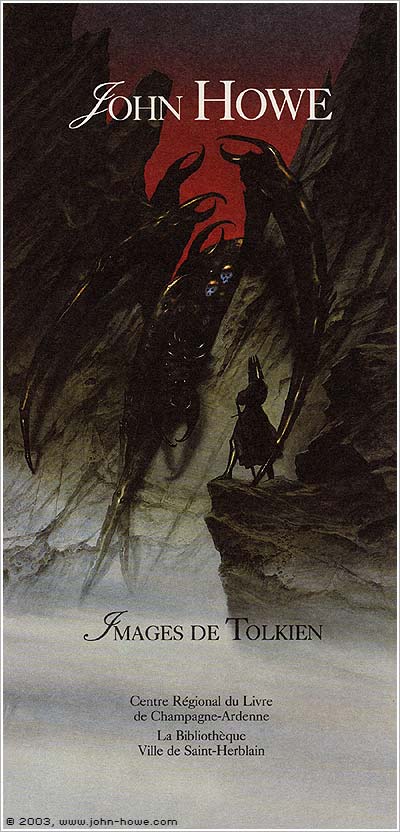
CM: My pencil is fed by many illustrators. In the field of science-fiction and fantasy, my all-time favourite surely is John Howe, whose work I knew and admired well before « The Lord of the Rings » movies: I remember my husband and myself being almost the only visitors at an exhibition of his works, when he was not as famous as today.

I also love the worlds of James Gurney (what a great idea to make dinosaurs and humans live together !), Moebius (a magician of the absurd) or Schuiten and Peeters (they create such incredible architectures—a subject I am totally unable to draw, alas). As for children’s books, Arthur Rackham, N.C. Wyeth, Lisbeth Zwerger and Rébecca Dautremer are among my favourites. As for comics, I especially admire Hugo Pratt, a master of black and white. Quite eclectic, as you can see!

Thank you very much, Cécile. We looking forward to working with you on many more issues of TFF to come. Thanks for all your wonderful art to date!

Thursday, 5 April 2012

We See a Different Frontier - fundraising

Today we've started raising money for a themed issue of TFF, tentatively dated for the end of 2012, to be titled We See a Different Frontier. If we're able to raise enough money, this will be a professional rate-paying anthology of colonialism-themed speculative fiction from outside the First World perspective, guest co-edited by Fabio Fernandes (who talks about the rationale of the idea on his blog).

If you feel this would be a worthwhile project to support, you can donate at this page:
All donations, however modest, are genuinely appreciated. Even if you can't spare the money, it would be great if you could help to signal boost this appeal: blog it, tweet it, facebook/g+ it, email your friends about it, shout it in the market, slip fliers into books or onto café tables, bribe young attractive people to mention it casually to strangers in nightclubs...

We're going to be pushing this quite hard over the coming few weeks, with guest posts, interviews, videos, giveaways, contests, gimmicks and whatever else we can think of. We might add new rewards by popular demand. If you have any ideas for things we can do, or that you can do to help, please give us a shout. If you'd like to guest blog for us, appear on video explaining why non-Western SF is important, offer some goodies as a further reward or giveaway, we'd love to hear from you.

I'll quote the full description from the appeal:
Colonialism is still a thorn on the side of humankind. Many of the problems of the Third World, for instance, are due to the social-political-economic matrix imposed on its countries by the First World countries since the 17th century (e.g. the manufacture by European powers of arbitrary borders and tribal conflicts in Africa, and then the creation of Arab countries to defeat the Ottoman Empire in WWI). The balance of power is changing in the 21st Century, but it's still essential to look back if we want to truly understand the forces at play in the political and cultural panoramas of Third World countries—and even in countries that hardly can be labeled as Third World, like the BRICS (Brazil, Russia, India, China, and South Africa).

Much widely distributed science fiction and fantasy is written by American and other Anglophone authors, and treats subjects close to the hearts of straight, white, English-speaking men. There's nothing wrong with this sci-fi itself—we love lots of it—but there's clearly something missing. Having white Anglo cis/hetero/males as (the only) role models is not an option any more. We aim to redress this balance, not only by publishing speculative stories by people with different viewpoints and addressing concerns from outside of the usual area (see World SF), but also by explicitly including fiction that addresses the profound socio-political issues around colonisation and colonialism (see Race in SF). We want to see political stories: not partisan-political, but writing that recognizes the implications for real people and cultures of the events and actions that make up science fictional or fantastic histories, as well as our own history.

For this anthology we will be looking for stories from the perspective of people and places that are colonized under regimes not of their choosing (in the past, present or even future). We are not primarily interested in war stories, although don’t completely rule them out. We are not interested in stories about a White Man learning the error of his ways; nor parables about alien contact in which the Humans are white anglos, and the Aliens are an analogue for other races. We want stories told from the viewpoint of colonized peoples, with characters who do not necessarily speak English, from authors who have experience of the world outside the First World.

We want to raise at least $3000 so that we can make this a professional rate-paying anthology for authors and artists from outside of the mainstream. All editorial and technical work will be carried out for no pay, but we feel strongly we should pay authors fairly for their work. This money will cover the cost of paying around $250 for each of 7-8 stories, plus a cover artist, publicity and advertising, review copies, rewards for donors, etc. All profit from sales of the anthology will be paid to the contributors as royalties. If we raise more than this, we can buy even more stories and/or pay even more professional rates to the authors. If we don’t quite make it, we’ll still publish this great anthology, but it may not be as large, as great, or as professional.
The call for submissions will follow at the end of this fundraising process (in early June), at which point we will be able be able to tell you how much we are going to pay for fiction, what other specific eligibilities and  requirements there will be, and so forth. In the meantime, help to make this a great anthology to submit to by spreading the word now!

Monday, 19 March 2012

Feminist Utopias: What’s Gender Got to Do With It?

In January, I posted to this blog on the subject of utopia, a perfect place. Is such a society possible?

Do certain conditions, such as the absence of crime, poverty, racism and other inequities make for the perfect place? Utopian narrative is a place to explore these questions, but these same narratives could be termed dystopian. Who decides what conditions are the most important, and how can these conditions be established and maintained without creating new modes of oppression?

One way to approach the inherent teetering between utopia/dystopia is to acknowledge and use that tipping point as a point of departure. In feminist utopian literature, narratives often complicate the easy answer, avoid closure, or look to examine multiple perspectives but provide no simple solution.

I hope I don’t have to explain or defend “feminist” here, but I welcome relevant dialogue.

Let’s just say by way of definition that feminist utopias are concerned with the search for equality in the ideal community. They consider both the existence of social stratification based on difference (sex, race, race, class) and the humanist ideal of sameness to be problematic. Gender inequalities are part of the exploration but not the totality. Feminist fiction tends to project its desires for perfect community and to investigate problematic elements of those desires. As such, some may seem neither utopian nor dystopian per se.

Three perfect examples are Ursula K. Le Guin’s The Dispossessed (she even subtitles it “An Ambiguous Utopia”), Starhawk’s The Fifth Sacred Thing, Marge Piercy’s Woman on the Edge of Time. These works look at social inequalities and suggest structures or processes to enable more equitable ways of living, but they’re not easy.

In The Dispossessed, the protagonist Shevek is forced to travel from his anarchist/socialist world to a repressive capitalist one to share scientific ideas which are deemed disruptive and self-serving to the functioning of his community. In The Fifth Sacred Thing, factions within a radically democratic city disagree about how to peacefully resist attack from militaristic invaders. Piercy’s novel presents an alternate society that may or may not be the hallucination of a mentally ill narrator.

Compare these narratives to utopias such as Edward Bellamy’s Looking Backward, which projects a desire for the perfect human community or dystopias like Orwell’s 1984 which predict extreme, dim futures as cautionary tales. Their approach is humanist, focused on repression of citizenry, not issues specific to women's social roles and intersections of identity.

What are your thoughts on these intersections, and what other texts explore this?

What's useful about this kind of literary exploration?

Tuesday, 6 March 2012

Sex percentages of authors reviewed...

Having just read the post on Coverage of Women on SF/F Blogs by Ladybusiness (read it for the stats and some analysis), I decided to tot up the TFF Reviews figures for last year. Just out of interest; this is an unscientific statistic, both because it's such a small sample, and because the count is open to interpretation (as I'll explain) and I'm hardly an impartial statistician. But for what it's worth...

Of the 51 reviews we posted in 2011:
  • 31 (61%) were of works authored or edited by men (to the best of my knowledge);
  • 18 (35%) were of works authored or edited by women;
  • 2 (4%) were of works or collections the gender of whose author or editor I cannot immediately tell.
For the record: for magazines, anthologies and other edited work, I used the sex of the named editor if one was given (or if I happen to know the person who edits the zine). Also for the record: we have a mixed team of reviewers, almost equally divided between male and female (53% of reviews had a male byline, against 47% female). For what it's worth, our current list of 34 titles available contains 20 with male authors, 10 female, 4 ambiguous (named with initials or names inscrutible to me).

The numbers are not as good as I hoped they would be, although marginally better than the average in the survey. This makes me wonder: do we need a reviewers' Russ Pledge?

I read a lot of SFF by women personally, but TFF reviews small press and indie publications, so these titles pretty much by definition have to be offered to us by the publisher or author, and our reviewers have freedom to choose anything on the list. I'm reluctant to change these rules (but would be interested to hear people's opinions on this), but I will say here that (a) we're actively looking for more women reviewers, so if you're interested in reviewing, take a look at our guidelines and drop us an email; and (b) we'd actively like to add more indie/small press titles by women authors and editors to our list, so likewise, check the guidelines and drop us an email.

Tuesday, 21 February 2012

New Issue 2012.22

I get angry when I hear the word ‘empire’; it reminds me of slavery, it reminds me of thousands of years of brutality, it reminds me of how my foremothers were raped and my forefathers brutalised.
-- Benjamin Zephaniah (on being offered the OBE)

Issue 2012.22 [ Issue 2012.22; Cover art © 2012 Robin E. Kaplan ]
Download e-book version: PDF | EPUB | Mobi

Sunday, 19 February 2012

Representative selection of Earthlings

I recently read Nancy Kress's Steal Across the Sky (Tor, 2009), and while I usually find Kress's work to be powerful, moving, intelligently thought-out social-political science fiction, I was disappointed by one decision she made early in the book. In an online classified ad calling for 21 human volunteers to visit alien worlds across the galaxy, the following words appear: "Volunteers must speak English" (page 36).

Oh, why?

Not only is that nonsensical (if the aliens are capable of learning human language, why are they not capable of learning human languages? And if they have to pick one language, why not Mandarin Chinese?), but it would lead to a most unrepresentative sample of humans "witnessing" these alien worlds.

In an online discussion almost exactly two years ago, on the subject of aliens selecting 1000 humans to save from a doomed Earth, I made the following estimates:
  • most will not speak English (under 100 do, maybe about 60 natively)
  • the vast majority will not be Caucasian
  • probably none will be very rich, or famous
  • a little over 50% will be female
  • some will be homosexual, asexual, etc.
  • some will be children or elderly
  • not all will be able or willing to breed
  • many will not be very highly educated
  • not all will be very nice people
Some of these are beside the point, but you can see what I'm getting at. If aliens want to deal with humanity, then their first call really shouldn't be to the President of the United States. I mean, duh. For a science fiction writer this sort of global variety and representativeness should be an opportunity to be interesting, not to mention to write into your story the sorts of people who are massively under-represented in Anglo-American publishing. To go out of your way to miss such an opportunity seems perverse.

Tuesday, 31 January 2012

Artist Interview: Rhiannon Rasmussen-Silverstein

http://futurefire.net/images/f18cover.jpgArtist and illustrator Rhiannon Rasmussen-Silverstein (web page) first illustrated for TFF in our November 2009 issue. She hails from Hawai’i, studies fine art and printmaking, works with a small YA press, and has an obsession with things with claws. She was kind enough to answer a few questions and give us the excuse to show some of her wonderful work.

The Future Fire: For the story ‘Nasmina’s Black Box’, you produced very striking black and white images, including the piece showing the soldier and the corrupt priest that we loved so much we used for the cover image of that issue. Could you describe the process of creating these images, from deciding what scenes in the story to illustrate, through to the technical production of the art?

Rhiannon Rasmussen-Silverstein: I think that this would be easier to demonstrate as describe (as many visual processes are). That said, I start every illustration by reading the story I’m working with and noting down which scenes stand out to me. Then I read it again the next day, this time with an eye for details or anything I might have overlooked the first read-through, and do a few rough thumbnail sketches.

[ Nasmina, © 2009 Rhiannon Rose ]For Nasmina’s Black Box, what immediately struck me was the main character, Nasmina, a girl stranded in a conflict that she’s really too young to understand. I wanted the uncertainty, alone-ness and danger to come across, so I chose to do the illustrations as stark black and white ink drawings. The first image came to me strongly (Nasmina encircled by a supportive shadow) which represented her family, but the second image, of the church, I struggled with more. I knew I wanted to do the scene in the church, since that’s the climax point of the story, but the final illustration really arose out of my frustration with executing the image. I think the finished one is the third attempt. The first two had a lot more white in them, and at some point on the second I got fed up, took my brush and covered most of the image in ink. Since it looked a lot better than I’d expected, I redid the picture with black instead of white, and then did a few final tweaks in Photoshop, most notably making Nasmina slightly transparent.

In my opinion, getting angry with one’s work is often an undervalued part of the creative process. It’s definitely crucial to my process!

TFF: I understand you’re studying art at Portland State University. How is that going? What have you learned in the course of this study?

RRS: I’m currently in the Fine Arts department at Portland State, which is a brand new program (it’s in it’s second year). Its a tiny program (thirteen students total), which I love, because we have a lot of one on one time with both the instructors and each other. I’m due to graduate in June, which is very exciting. Anyone who knows me knows that I’ve had a tumultuous relationship with school at best throughout my career as a student and I am definitely not terribly broken up about moving past this stage in my life.

That said, school has given me opportunities and taught me things that I wouldn’t have otherwise learned. Mostly related to life and talking about art. If I had to choose one thing that I treasure above everything else I’ve learned, it’s printmaking. And astrogeology. Okay, so they’re not related...

TFF: How do you think art makes a difference in the world?

RRS: To be frank, I don’t think art itself can or does make a difference in the world. People make a difference in the world, and one way we communicate or express opinions is through art. What art can do is plant ideas. Without action also being taken to follow up those convictions, art is just window trappings. Decoration. And that’s fine.

TFF: What or who inspires you?

RRS: Illustration-wise, I tend to draw a lot of my inspirations from older works by printmakers like Yoshitoshi Tsukioka and Käthe Kollwitz. The contemporary artist Lee Bul continually does work that blows my mind. She works in this huge, elaborate installations, but the compositions and forms she’s working with are beautiful and disturbing, monochromatic, and expertly composed, something that I work for in my own illustrations.

Fiction-wise, I’m currently reading the David Hawke translation of The Story in the Stone (also titled as Dream of the Red Mansions) which is just crazy inspiring and I’m not even a fifth of the way through yet. Anyone interested in world fiction, Chinese history and culture, good literature, or just an entertaining story should pick these books up.

I also love comics! I work in an editorial capacity with a host of incredibly talented artists on an annual comics anthology, Tankadere, which can be found at the small press Crab Tank’s website, and working with them is fun and incredibly rewarding. There’s nothing like holding a finished book in your hands and knowing that it’s filled with amazing stories and that you had a role in bringing it about.