“To invent stories about a world other than this one has no meaning at all, unless an instinct of slander, belittling, and suspicion against life is strong in us: in that case, we avenge ourselves against life with a phantasmagoria of another, a better life.”
Long Dead Venusians: Meditation on Climate Change as a Cosmic Theme
Guest post by Phil Wilson
The night sky has always been both a magnet for curiosity and a projection screen for fantasy. The ancients saw mythical beings in the Rorschach of celestial patterns. Galileo, Copernicus and the church fought battles over the nature of truth in these same heavens. Now, fittingly, in our era of collapsing economies, hypertrophied corporations and climate catastrophe, the cosmos embodies our political anxiety.
A whimsical piece in The Nation (“Are Aliens Who Visit Earth Likely to Be Socialist?”) features a debate over whether or not alien visitors are likely to be socialists. In “A Statistical Estimation of the Occurrence of Extraterrestrial Intelligence in the Milky Way Galaxy,” Cai et al. reflect on the likelihood that some, most, or all of our techno-savvy brethren, presumably scattered across the galaxy, have fatally befouled their home planets, or violently obliterated themselves before they were able to master interstellar communication or travel. The authors of this study conclude that “Pann” (the probability of self annihilation) is the most significant factor in deriving probability formulae for future interactions with extraterrestrials.
The human impulse to project has tossed Ronald Reagan and Margaret Thatcher into the sky. These political ghouls are now entangled in the streaks of the Milky Way, deregulating the environmental protections of an entire galaxy and freeing ET to frack and strip mine to his heart's content. Are we all alone in a universe in which self destruction is an existential mandate, or are we earnestly expecting a species of interstellar socialists to descend from the heavens bringing a message of salvation?
Our own earth-bound stories are the default for extraterrestrial absence: aliens (as we imagine them) may be a bit more clever than ourselves (figuring out light speed travel and wormholes) and we routinely depict them with huge heads and atrophied limbs, resembling our future selves. We could, if we wished, imagine a species of interstellar octopuses. The octopus has, arguably, more magnificent neural structures than our own, enabling the blessed mollusc to instantaneously survey the complexity of the ocean floor and consciously—using themselves in lieu of a canvas—reproduce the colors, contours and shadows of their surroundings. How self-effacing! How brilliant to intuitively divine the techniques of photorealism in three dimensions! Octopuses, in their hundreds of millions of years of success, have proven that gifted creatures are not inevitably destined to channel intellect toward an endgame of self obliteration. No group of octopuses (so far as we know) has ever founded a corporation. Can human beings even imagine superior intelligence untainted by capitalism?
Venus, planet of love Was destroyed by global warming Did its people want too much too?
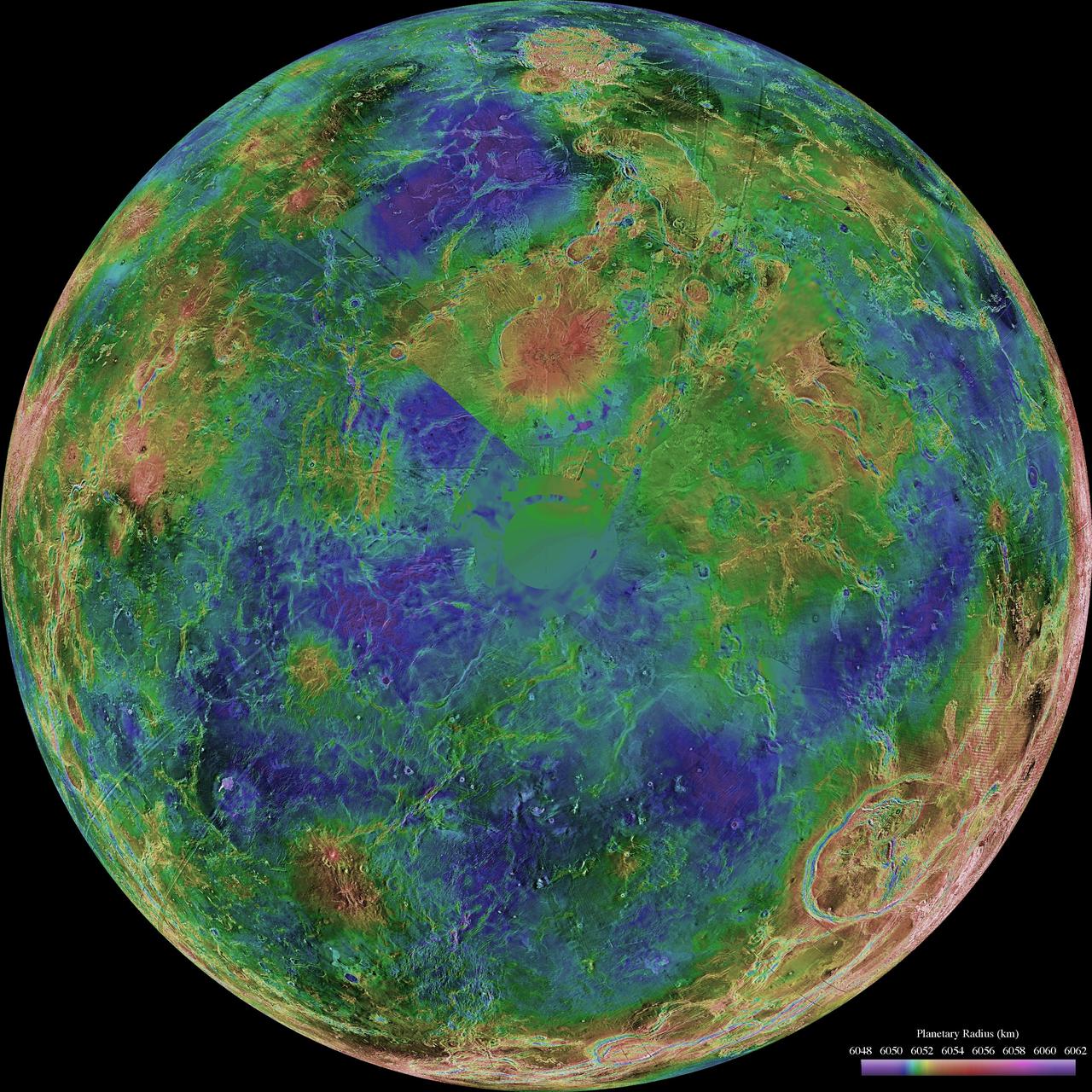
Years ago, in elementary school, I read a book about the planets that showed a fanciful picture of the surface of Venus—a lush world full of Dr. Seuss-like creatures and exotic plants. This was long before Soviet space probes determined that, beneath Venusian clouds, the planetary surface does not at all resemble a tropical lagoon, but rather imitates a pizza oven. The temperatures on Venus run as high as 900 degrees Fahrenheit thanks to a greenhouse effect on steroids. The atmosphere is 97% CO2, clouds of sulfuric acid obscure our view of the basalt paved surface and the atmospheric pressure would transform a range rover into a crushed hunk of melting metal.
And yet NASA climate modeling suggests that cool oceans may once have been a Venusian feature. Is Venus the ultimate victim of biblical rebuke? We earthlings know all about sin and the brutal forces of retribution. Has Venus, the wayward and ruined sister of our lovely blue marble, suffered the full ferocity of fire and brimstone? Jonathan Edwards, the 17th century New England preacher who made hellfire into a personal fetish, might as well have been describing Venus to his quivering congregants. In our florid, contemporary imaginations, we do not envision Venusian sin as a matter of skimping on interplanetary Jesus so much as we picture a Venusian society that capitulated to the menace of capitalism. But Jonathan Edwards was partly right. Sin and fire have a mutual plan.
Mitski's theory of Venusian demise has respectable, scientific support—at least speculatively. Jason T. Wright, professor of astrophysics at the University of Pennsylvania, writes in “Prior Indigenous Technological Species”:
In this paper, I discuss the possibility for such prior indigenous technological species; by this I mean species that are indigenous to the Solar System, produce technosignatures and/or were spacefaring, and are currently extinct or otherwise absent. The question of why this species is not extant in the Solar System is not relevant to much of my discussion, but needs to be addressed at least well enough to establish plausibility for the hypothesis. The most obvious answer is a cataclysm, whether a natural event, such as an extinction-level asteroid impact, or self-inflicted, such as a global climate catastrophe.
The less salacious, more generally embraced speculation regarding Venus's sad history points the finger at Volcanism and increased solar output as the sources for greenhouse agents (NASA Study). We earthlings have our own volcanic history as a reference point. Many geologists agree that the remnants of the Siberian Traps Volcanic flows (categorized as a "large igneous province") are the smoking gun for the Permian/Triassic boundary extinction, colloquially referred to as "the great dying." Until now, the Permian extinction holds the title for climate ruin on earth, turning oceans into toxic, stagnant, murderous graveyards for Trilobites, Tabulate and Rugose corals. Even six species of insects—the great masters of industrial breeding—were wiped from evolutionary history by the rage of Permian climate warming.
Study of the deep, geological past offers generous imaginative license to scientists, and Gavin Schmidt—director of NASA's Goddard Institute for Space Studies—has stated that carbon spikes in the geological record should be scoured for biomarkers of fossil fuels. Is it possible that some large brained offshoot of Permian protomammals attained the capacity for Exxon/Mobile psychopathy? Are the Siberian Traps falsely accused of the crimes really enacted by the profiteers of a lost Permian empire?
Gavin Schmidt (“Could an Industrial Prehuman Civilization Have Existed on Earth before Ours?”) believes that intelligent life might have evolved at multiple times in geological history, only to succumb to the awful temptations of industrialization. Perhaps capitalism, consumerism and environmental destruction has run as a repeating loop—a horror show with sequels (canceled and renewed). Geologists have favored mass extinction as a reference point, a means of geological punctuation, but, until recently, extinction seemed like nothing more than a product of natural caprice. Now, we have an alternative explanation, a new story to mull over and consider. As we reflect on the sixth extinction, might our method of self destruction be more than a mere one off event? Are any of earth's past mass extinctions also rooted in the deadliest of all mortal sins—corporate greed?
No matter how hot Phoenix or El Paso get, no matter how many square miles of polar ice caps melt, no matter how many wildfires turn Canadian forests into New York City ash, climate change is, apart from the excruciatingly complex science, a story, an unfinished allegory written, perhaps, in an obscure dialect. There are many versions of climate change—the story—along a continuum between the imminent onset of human extinction espoused by Guy McPherson and The Heritage Foundation, oil industry funded pablum of drooling denial. The fate of humanity is absolutely founded on the climate story. In essence, our existence is contingent on a poetry slam, a narrative contest fumbling for the hearts and minds of the human race. Human survival, if it is to prevail, will require a ferocious explosion of narrative..
As storytelling creatures, humans have performed narrative contortions to make ourselves the beneficiaries of mass extinction. The Permian extinction gave us the treasured dinosaurs, and the KT extinction cleansed the earth for our own ascension as the apex of the mammalian empire. But The Long Dead Venusians story (whether or not it happened in the manner that Mitski sings about, or happened at all) rather stymies our self-congratulatory instincts. The Venusians fucked up big-time billions of years ago and turned their lush paradise into an irredeemable hellscape. They left not a thread of silver lining. In so far as we identify with the long dead Venusians, their relevance to us is exclusively cautionary.
UK environmental writer and activist George Monbiot often talks about the importance of storytelling as it pertains to politics and the existential threats of capitalism. Monbiot specifically extols the “restoration story”—a narrative form that describes both the nefarious forces throwing the world into disorder, and the solution that mobilizes disobedience to "restore" lost harmony.
All political stories have a vision (or nightmare scenario) of potential ruin should people fail to rise up and resist evil systems. Jonathan Edwards was a master storyteller focused obsessively on the matter of potential ruin. His virtuosity shames the tepid rhetoric of climate change. The very fire and brimstone that perhaps charred the bones of our long dead Venusians, became, for him, the narrative tool to move an entire society to tremble in the pews. Did Venus crash and burn for want of a Jonathan Edwards?
O sinner! Consider the fearful danger you are in: it is a great furnace of wrath, a wide and bottomless pit, full of the fire of wrath, that you are held over in the hand of that God, whose wrath is provoked and incensed as much against you, as against many of the damned in hell. You hang by a slender thread, with the flames of divine wrath flashing about it, and ready every moment to singe it, and burn it asunder.
Jonathan Edwards engaged each listener personally—images of hellfire had an immediate, visceral impact. This is not the case for climate change storytelling, with rhetoric hopelessly focused on far away, slow moving events, like dysregulated ocean currents and glacial melt in Antarctica. Even the term “climate change,” utterly fails as a narrative device. As Kirkpatrick Sales notes, the phrase accurately describing the severity of our collective assailant is “global overheating.” We cannot address the issue of murderous capitalism and overconsumption without the full power of storytelling. Edwards railed at handwringing congregants who imagined themselves perched upon rotting floorboards, while below, the flames of eternity hungrily craved a bounty of sinners. Edwards was the master storyteller that is absent today.
We know that climate change is not inevitably an abstraction, because, according to Sarah Young, writing in The Independent, 19% of children in the UK have had climate change nightmares. A nightmare is unlikely to be about crop failure in Honduras, even if climate change is largely about the suffering of poor people long oppressed by colonial contingencies. The climate nightmare is about fire and flames honing in on the sweating dreamer.
Bad dreams inhabit the same personal range of fears as a Jonathan Edwards sermon. Thus, I very recently had a dream of running to the porch thermometer with my clothes trailing plumes of smoke, to see that the temperature had risen past 300 degrees Fahrenheit. The real thermometer on my porch tops out at 120, but dreams encompass a larger set of realities than a $10 hardware store device can reveal. The temperatures on earth have not reached 300 degrees since the Hadean Eon. Not even the end Permian apocalypse approached such scale. But my dreams, apparently outran the descriptive horrors of my native planet in search of Venusian geological history. Venus, and only Venus, tells us the true story of CO2 and its intentions.
The story of the long dead Venusians has what our own climate change story does not—an incontrovertible conclusion. Would human fate be altered if interplanetary visitors were in fact socialists who had surveyed the smoldering remnants of every capitalist planet in the Milky Way (and brought us the photos)? What if time traveling, alien socialists wielded the uncut documentary of Long Dead Venusians? Would we see rightwing Venusian think tanks funded by the Venusian oil industry? We suspect that Venusians rather obediently accepted dubious explanations from politicians and industry profiteers. If we imagine that Venus’s most gifted storytellers failed to inspire the passions of those who might have acted with collective resolve, would that move our own storytellers to aspire to attain the poetic force of, say, Jonathan Edwards? Edwards spoke about the agony of hellfire with absolute certainty, and yet we, with far more data, equivocate while being helplessly swept along by a Venusian reprise.
As bright and lovely as Venus has been in recent mornings, the orb reminds me that Venusians capitulated to absurd denialism. They failed to launch general strikes or to use force against psychopathic oil barons, banks, industrialist farmers and government officials. Their downfall was one of collective banality, a shared and shriveled imagination that could not conceive of a Venus devoid of profit motives, so called free markets, and the virulent addictions of consumerism and materialism.
What did the final moments of Venusian life look like? Was the planet bathed in the dull glow of smoke and fire resembling our own conflagrations in Canada and Siberia? What about floods, searing heat, draughts and the violent rage of the Venusians themselves as they acted out their climate induced frustrations upon one another?
A.M. Gittlitz took the "yes" position in The Nation's debate on whether or not alien visitors would inevitably be socialists. His answer obliquely addresses our losing battle with climate change:
J. Posadas, the leader of the Posadists, offered a political and economic defense of our future alien visitors in his 1968 “Flying Saucers” essay. For alien civilizations to travel hundreds of light years to Earth, he wrote, they would need to have an “infinitely superior” form of social organization, “without struggle and antagonisms.” Marxists call the type of society that has advanced beyond our current divisions of nation, class, race, and gender—a society in which each gives according to their ability and takes according to their needs—socialist.
I am almost certain that Gittlitz read the study referencing Pann. He must know that the capitalist impulse to chase profits over the cliff of self destruction is an existential challenge to every alien civilization. But, are we really talking about interstellar socialists or are aliens merely a rhetorical prop—like my Long Dead Venusians? We are unfortunate victims of The Fermi Paradox, and no aliens are going to instruct us about the virtues of socialism. The goalposts have moved; aliens are never anything more than thinly disguised earthlings, and interstellar travel is simply a fantasy like free markets, trickle down and Jonathan Edwards’ pyromaniacal God. We do not need to look up, like Fermi, and ask, “where are the aliens?” Instead, we should look straight ahead, at one another, and ask—“where are the socialists?”
We’re joined by our co-editor and in-house illustrator Cécile Matthey, artist of “Out of Bounds” in TFF #66.
TFF: How did you go about illustrating “Out of Bounds”?
Cécile Matthey: The first illustration (above) is a wink to 80s posters, that showed impossibly kitsch beaches at sunset. I had some in my teenager room at the time! I thought it could match the atmosphere of the story, that takes place in a virtual world full of perfect spots. Perfect spots that are not entirely finished: at some point in the story, the protagonists escape through a “breach” at the bottom of a pool. This striking moment is the theme of the second illustration.
TFF: Pastels are not the most obvious choice to illustrate a VR world, and yet your illustrations are very effective. Would you like to tell us more about representing “techno” landcapes with analogue tools?
CM: Analogue tools are very versatile. There are so many ways to use them and mix them that you can achieve all kinds of effects. It can even be a creative challenge to use a medium that looks a little unusual in the first place, like pastels.
TFF: Do you have a lucky pen or pencil?
CM: I inherited a few brushes from my maternal grandfather, who died when I was eleven. They can't be used because they are full of dried oil-paint, but I keep them as a decoration on my desk. I have fond memories of him. He worked as an engraver but was also a talented sculptor and painter. He gave me some taste, and surely some gift, for the fine arts.
TFF: If you could acquire the ability to speak with one type of animal, which would you choose?
CM: Other than elephants… maybe cats. A few years ago, as I was walking in the street, I saw a cat sitting by a window. I tried to catch their attention, but they kept their eyes intensely fixed on something behind me, higher than me. I turned around, but I saw nothing, of course… Today I'm still wondering what it was. I would have loved to ask them!
TFF: What does “The Fungal Force: A History” mean to you?
Colleen Anderson: We’ve learned so much about the mycelial network that links trees and root systems, an alien not-animal lifeform that is part of our world. And of course, there is the destructive controlling fungus that uses insects like zombies to meet its needs. My fiction story, “Sins of the Father” (in On Spec #105) explores that aspect. I work in Vancouver’s DTES (Downtown East Side) and see people being destroyed and physically altered by drugs every day. There is much dehumanization that starts with traumatic abuse in childhood and continues with othering in adulthood. We may see one city or country being particularly abusive of people, but in the end, we are all susceptible to our base natures if we choose to see groups of people as not human or less than.
TFF: You use the names of different mushrooms in a very evocative way. Were these scientific names part of your inspiration for this poem?
CA: No. I chose the names that work in rhythm and potency to the content of the poem.
TFF: What are you working on next?
CA: I’m writing a book of poems on Rapunzel. As is shown, most fairy tales have dark cores. I look at how a hostage in a tower grows and changes, and what happens after the not so happily ever after. Of the fairy tales, Rapunzel may not have died like Snow White but goes through extreme trials and tribulations, giving birth to twins when exiled to the desert.
Extract:
It began with the men in blue
plus a few other people in government succumbed
when each breath they drew labored with hate
TFF: How did you go about illustrating “Between the Shadow and the Soul”?
Toeken: First off: beautiful writing by Davian Aw. There was heaps of evocative imagery to work from. I decided to put the two images together using collage type techniques and then messing around with old Nokia cameras, compositing 72 dpi blocky photographs of fauna, soil and mannequins, painting those separately and then scanning them. As ya do. It’s fiddly fun stuff. I think the whole process becomes what the artist Russell Mills refers to as ‘serious play.’
TFF: Tell us about an artist whose work you're particularly enjoying at the moment?
Toeken: As per usual, there’s a whole bunch of people out there whose work right now I find is a treat for the eyes and mind. Recently I’ve been sifting through and really enjoying stuff by Mark Smith, who does extraordinary work in ceramics, Gudrun Dorsch, Berenice Abbott, Olawale Moses, Mark Marinkovich and Sarah Jarrett.
TFF: What else are you working on now?
Toeken: Just finished work for Gavin Chappell, Gypsum Sound Tales, Shoreline of Infinity, a few spec pieces and I'm currently trying to get my head around another possible collaboration with my writer pal, Phil Emery (Android Press will hopefully be publishing the cyberpunk-themed graphic novel Razor’s Edge later this year).
We’re joined today by Anna Ziegelhof, author of “Out of Bounds” in The Future Fire #66, for a brief chat about virtual worlds, aliens and exhibition spaces.
Anna Ziegelhof: I wrote this story after watching speed-runs of my favorite game (Portal): if you know how, you can disregard the limits of the (game-)world, by-passing the traps meant to kill you. The thought that it might be possible to move independently from the constraints of the world was inspiring to me.
TFF: Would you like to meet aliens from another world?
AZ: Yes. I’d be particularly interested in language, communication, and their perspective on human cultures.
TFF: Tell us about a piece of art that came to life for you.
AZ: There’s an incredible exhibition-space, Gasometer Oberhausen in Germany, a decommissioned gas holder from the area's industrial past. It’s a sublime, completely dark space; you get creature-feeling. They had a video installation by Bill Viola (“Five Angels for the Millennium”) there years ago: that work plus the space in which it was presented is still with me.
Extract:
I watched my hand, blurred by the turquoise ocean. I imagined a vast
unseen world beneath. Nothing down there would deign to pay attention to
me. I was unnoticed and insignificant. I moved my hand, palm up, back
toward me and said goodbye to the ocean for today. I paddled the board
back to the beach. It was nice to move my muscles against the resistance
of the water. It felt good to carry the weight of the board and feel
the sand under my feet. An evening breeze ruffled through my wet hair.
Goosebumps rose on my skin. So real.
We're joined by Sebastian Timpe, artist of “One Day” in TFF #66, for a quick chat about illustrating, technique and problem solving.
TFF: How did you go about illustrating “One Day”?
Sebastian Timpe: The first step when working with text for me is to read it. I like to read at least once purely for pleasure and just to soak in the ambiance of the story. Then again focusing on what imagery it brings to mind. Then again scanning for specific visual details the author has set out. For this story I sketched out a number of different ideas from direct scenes in the text to more abstract representations of the character’s inner feelings. In the end I kind of went with one of each.
TFF: Your first illustration for this story shows many vibrant colours, while for the second you have chosen a mostly black and white approach. How did you pair these two moments in the story with such different styles?
ST: For the first illustration (above) it is a concrete moment in the story, when our main character steps into the room towards the end and sees the woman she loves. So I went with a very realistic approach in terms of colors and setting, I wanted it to feel warm and vibrant.
For the second illustration it is a more abstract representation of the arc of the story. These two women lives who have been entangled and finally they reach out to each other. I wanted to keep with the fantasy setting choosing a door to represent the new pathway they might take together. But keeping the color pallet black and white (with the exception of the red thread) to detach the image from the strict confines of reality.
TFF: Do you have a superstition or quirk you insist on while working?
ST: Any time something doesn’t feel right in the illustration process or isn’t turning out how I want it to I take a step back and go pet my elderly cat Scruffy. She can’t tell me the solution but it always helps to get my mind off the problem and into cat petting mode instead.
TFF: What does “Between the Shadow and the Soul” mean to you?
Davian Aw: The escapist allure of guilty pleasures that save us even as they destroy us, and how those two things can't always be separated. I think many of us—especially from marginalised communities—have secret dreams and aspirations (and favourite media) that may not always be the most aligned with our political beliefs and values, but where those may sometimes be among the few things that keep us going or bring us joy. So that was the tension I wanted to explore here, and the ways in which we disengage from reality when the world makes it unbearable for us to exist as ourselves. Separately, I started writing this story while homesick for New York City after working there a few months, and a lot of the scenes were snapshots of places that I wanted to remember.
TFF: Did you ever wish to be someone else?
DA: All the time. Part of it is that need for escapism, which faded as I grew older and things got better and I found my place in the world. But there's still that curiosity and a kind of grief that we can only ever experience such a limited part of all that this world has to offer. There are experiences and perspectives that are forever inaccessible just because of who each of us are, and I've always been sad about that. Stories are the next best thing we have to get those intimate glimpses into lives we will never live, in this world and beyond.
Extract:
Personality modules spin into motion and transform Johanna into Ashley.
She turns to the window and meets the sight of her beautiful face framed
by sun-gilt hair. Crafted memories rush over her own until that face is
no longer a stranger’s, but hers, drawing her deep into the soft
embrace of Ashley’s perfect life. It’s her life, now; her memories, her
body, and everything is all right.
TFF: How did you go about illustrating “The Fungal Force: A History”?
Melkorka: After studying the poem, I picked out some of the themes that resonated most with me. Having visited in Cambodia in 2003, I had a strong felt sense of the violence that took place during the Pol Pot regime so I began sourcing some images of people who had disappeared during that time and started there. I then sourced an image of police brutality and overlaid it onto the first image. Then I painted the mushrooms, contrasting work by hand with the digital imagery in the hope of illustrating the natural world taking over our one, as in the poem.
TFF: Into which animal or plant would you like to be able to morph?
Melkorka: A dolphin. They seem to have the best time!
TFF: Tell us about an artist whose work you're particularly enjoying at the moment?
Melkorka: Akira Kusaka—I love the dream-like quality of his work.
This week we're joined by Frances Koziar, author of “One Day” in TFF #66, for a chat about day, night, and writing.
Art @2023 Sebastian Timpe
TFF: What does “One Day” mean to you?
Frances Koziar: For "One Day" I was thinking (a very condensed) Virginia Woolf meets high fantasy. 😋 Particularly Mrs. Dalloway, where the entire book happens over the course of one day. Representation is really important to me as a very multi-underprivileged author, and in this story I also wanted to lift up older women, because there are enough fantasy stories about 18-year-old boys saving the world to last a lifetime.
TFF: If you could shut down the power so we all just have to stare at the night, would you?
FK: Absolutely! (At least, sometimes. 😋) I think it's a collective loss how ignorant people have become about how the night sky actually looks without light pollution. I see it a lot in the writing of fantasy authors actually—they'll describe the moon as being the focus of the sky, when a partial moon is really not that remarkable when the sky is filled with a million stars and the Milky Way. They also tend to have no idea of when the moon rises and sets (it's not the same as the sun! It's out in the daytime just as much as the night).
TFF: What are you working on next?
FK: I'm always writing short fiction, nonfiction, and poetry while also working on a novel. "One Day" was my first foray into including poetry in my fiction, and I loved it so much that I decided to include some poetry in the novel I'm just finishing rewriting from scratch now—a literary high fantasy novel about trauma that I wrote ten years ago and haven't found an agent for yet. Wish me luck! ❤️
Extract:
In the still calm of the palace gardens I stand, watching the sky change
from navy to a pale blue streaked with gold. I am as still as only an
ageing soldier well used to waiting can be, my grey hair tied tightly at
the nape of my neck.
We welcome Fluffgar, artist of “Boxes Full of Memories” in The Future Fire #66, for another visit and short chat to celebrate the latest issue.
TFF: How did you go about illustrating “Boxes Full of Memories”?
Fluffgar: I read the story and then let it steep/ferment in my mind. It's often best for me to go and do something unrelated for the time this takes. Get on with some other work, clean the house, play a video game. Subconscious likes to be left to do its first drafts.
TFF: Your first illustration for this story feels very intimate and truly "inhabited" by someone's personality. Did you find inspiration in an actual place?
Fluffgar: For the domestic chaos of the first illustration I need only to look up for inspiration. Creativity and messiness are often found in the same person, and in my household that is doubled. That said, the environment depicted isn't a real location.
We welcome Devin Miller, author of “Smells of Brine, Witching” in The Future Fire #66, for a mini-interview.
TFF: What does “Smells of Brine, Witching” mean to you?
Devin Miller: We tend to think of things that change and decay as sad, wasted things. What forests teach us is that decaying things are food, homes, an essential part of creation and regeneration. What beaches teach us is that when water wears a stone down, it does get smaller but it also gets smooth and beautiful. This is one of my favorite metaphors for writing: unwritten ideas and unfinished stories aren't wasted, they're just compost for future writing. And compost is a form of transformation, and therefore magical.
TFF: Is it the double nature of fungi that makes them such a suitable witchcraft ingredient, in your opinion?
DM: I think they're a suitable witchcraft ingredient because they are themselves witches. Saprobic fungi feed on dead organic matter, break it down and transform it, which is pretty much what a witch does stirring her cauldron.
TFF: What are you working on next?
DM: I've got lots of short fiction to revise; I've particularly been meaning to get to the one about a road trip with a sea-wife.
Extract
Quiet have I lived at the border between
woods and sea. Here where shorebirds scurry, forage,
where wrens, juncoes make busy life in tree homes,
here have I breathed salt.
![[ Issue 2023.67; Cover art © 2023 Fluffgar ]](http://futurefire.net/images/f67cover.jpg "[ Issue 2023.67; Cover art © 2023 Fluffgar ]")


%2C_Parque_natural_de_la_Arr%C3%A1bida%2C_Portugal%2C_2020-07-21%2C_DD_44.jpg/876px-Pulpo_com%C3%BAn_(Octopus_vulgaris)%2C_Parque_natural_de_la_Arr%C3%A1bida%2C_Portugal%2C_2020-07-21%2C_DD_44.jpg)

.jpg/641px-Jonathan_Edwards_(Princeton_Portrait).jpg)


